The Yellow Wallpaper

Charlotte Perkins Gilman, The Yellow Wallpaper (First Published 1892)
http://www.gutenberg.org/ebooks/1952

A massive amount is owed to the Gutenberg Project for now providing over 60,000 free eBooks. The Yellow Wallpaper marks one of the many culturally significant texts that now exists for free. Traffic to the site has more than doubled during the pandemic and there are thousands of instant classics that are available in numerous formats. (I would recommend! Other posts will continue to utilize eBooks available.)

“It is the strangest yellow, that wallpaper! It makes me think of all the yellow things I ever saw – not beautiful ones like buttercups, but old, foul, bad yellow things.”

The Yellow Wallpaper is seen as a significant work culturally. It is commonly seen as an important piece of feminist work. The abstract structure of the story offer numerous places of possible analysis with the most common perspective highlighting critiques of an oppressive patriarchy. Ultimately the story could have been significantly longer with much of the situation ignored to succinctly cover the internal thinking and experience of the narrator. As a secret diary, The Yellow Wallpaper is written from a perspective of the wife limited by the patriarchal attitudes of her husband. The husband, John, who also happens to be a doctor is shown to consistently minimize the feeling and expression of his wife. In addition, much of the actual discontent is explained away by hysteric episodes. This makes the work a microcosm for the treatment of women at the time.

Gilman was an activist for women’s rights and the situation described above acted as a form of her advocacy. The Yellow Wallpaper was a result of her own experiences and the fashion in which the patriarchal attitudes shaped treatment of women’s mental health. When the couple move to the mansion in the story it is part of the narrators rehabilitation. It is a clever critique of treatment of mental health treatment. The narrator is confined to a room and it is fascinating to consider the parallels to attitudes on mental health in the modern day. While it is now common knowledge that exercise, exposure to the outdoors and an active lifestyle can help with depression the opposite was often recommended for women at the time due to the strong patriarchal attitudes.

“If a physician of high standing, and one’s own husband, assures friends and relatives that there is really nothing the matter with one but temporary nervous depression – a slight hysterical tendency – what is one to do?”

The Yellow Wallpaper offers a feminist critique of patriarchal attitudes as well as targeting the treatment of mental health. A great short story it is pertinent even in the modern day and highlights the potential consequences of isolation. The titular yellow wallpaper becomes part of the narrators visions as she largely remains confined to a single room. The patterns come alive and three months of isolation and confinement take their toll. The possibility for analysis of the narrator’s connection with the woman in the wallpaper is huge along with her gradual estrangement with her husband. The narrator longs for freedom not only from the room but also her husbands control. The ending is moderately confusing but the message of the story is much easier to follow.

As an engaging short story, it has been adapted in multiple fashions. As a free resource that would not take long to read it should be on the list of books to read. The messages remain pertinent and as a secret diary form of narrative it offers a unique and interesting perspective. I was glad to find this story and along with the significant background on Gilman’s motives and history the story takes on even more importance. This is still a powerful feminist critique of patriarchal attitudes embedded in an interesting story that as suggested also points to the treatment of mental health.

What Do You Do With…

Kobi Yamada, What you Do Matters (Box Set)

The What You Do Matters box set comes with three books:

What Do You Do With an Idea

What Do You Do With a Problem

What Do You Do With a Chance

Written by Kobi Yamada and illustrated by Mae Besom this collection features the whole series of best sellers which promote everyone’s innate creativity, perseverance and bravery.


What Do You Do With an Idea?

The first book of the collection that spawned the idea egg – which is also available as a separate plushy – sets the tone for the collection with beautiful artwork accompanied by simple and encouraging messages.

With the idea anthropromorphized the boy struggles with others judgement as well as his own acceptance. The gradual process of reconciliation with his own idea before coming to own and accept it as a point of pride offers numerous lessons for everyone. None of these small stories have an exceptional amount of text but the simplicity and beauty that accompany such meaningful messages make them powerful. No one can ever truly understand your idea more than yourself and this story depicts the confidence and happiness that comes with pursuing your own ideas and dreams.

What Do You Do With a Problem?

With the same beautiful artwork as What Do You Do With an Idea? this story is put as the second of the trilogy. The same simple but motivating messages adorn the pages and give useful advice for when problems emerge in your life. No one gets to choose their problems and this story not only reminds the reader of this but that ultimately these can lead to opportunities.

The other key message is that allowing a problem to fester can lead to it just growing and simply increasing anxiety and worry. It takes bravery and confidence but once you face up to the problems they have often been built up to be far worse in your mind.

What Do You Do With a Chance?

As the conclusion of the trilogy, What Do You Do With a Chance? offers a final inspiring message of self belief and confidence. Do not be embarrassed about trying to take chances, it is through chances that life changing moments occur. This final story offers a wrap up of all the messages from the other two stories and reminds us that others judgement only serves to limit the opportunities we allow ourselves to take.

Being scared of big chances is certainly part of being human but as all these stories teach, the actual rewards far outweigh the psychological fear that informs inaction. When an idea is seen as part of identity and therefore something to be proud of, when a problem is seen as a starting point for opportunity, and when a chance is something to grasp rather than fear being embarrassed of missing then everyone can ultimately see a much happier and positive future.

These simple but beautiful stories offer pertinent encouraging messages. It does not take long to read through the stories but enjoying the artwork and style is part of the pleasure. Buying the set as a gift or for personal enjoyment would both be good purchases!

Where the Crawdads Sing

Delia Owens, Where the Crawdads Sing, (2018)

This book was a brilliantly constructed work, it is no surprise to me that it topped The New York Times Fiction Best Sellers of 2019 and Fiction Best Sellers of 2020 for a combined 30 non-consecutive weeks. It is fascinating to read and admire the delicacy of unraveling two stories and drawing the reader into understanding how they gradually coalesce. The ending is not only powerful but thought-provoking. Where the Crawdads Sing has significant questions surrounding prejudice taking place over a period of 1952-1969. As the two timelines close together the life of Kya only becomes more complicated and raw as her trials and tests are vividly described.

There is a rawness to her tough childhood punctuated by the other timeline of a murder mystery. This is designated as a number of genres, as much a murder myster as it is a coming-of-age novel. Without wishing to ruin the story there are several threads that a reader will love to follow. Growing up on her own from around 10 years old, Kya is derided as ‘The Marsh Girl’ but through her trials and tribulations reaches a place of happiness. Based in North Carolina her life is apart from traditional civilization and therefore does not take into account the significant social upheaval of the 1950s and 1960s. However, the impact of segregation, prejudice and racism are all felt in ways that are unwritten but experienced by the protagonist.

Visceral elements of both timelines may be upsetting to some readers but it is the hardness of Kya’s reality that make the eventual conclusion a satisfying reward. Without giving anything away the legal case that envelops the latter chapters is gripping and means the book reaches a climax late. This makes the rest of the book a gradual build up punctuated by moments of raw emotion. Owens paces this book wonderfully and manages to involve the dramatic societal changes of the time period even in the story about someone so far removed from traditional society.

This book will in my opinion inevitably become a film at some point and I believe that it offers the perfect story for such an adaptation.

Personally, I found this book one of the best novels I have read recently. I wish I had more time to enjoy the fascinating story. I will re-read this at some point and take in more of the vivid descriptions of the beautiful marshes that Kya calls home.

Normal People

Sally Rooney, Normal People. A Novel, (2018)

This book by Sally Rooney received considerable attention and recognition when it was published. Perhaps part of the appeal of Normal People is the enthralling way Rooney presents the roller coaster relationship of Connell and Marianne. The story is a brutally honest depiction of what normal life can be. Connell and Marianne come from very different backgrounds, but their respective paths continually intertwine and throughout the trials of their respective lives they always end up close together again. Growing up in Sligo country of Ireland both end up travelling to Europe as well as moving to Dublin for university. There is no reason that these two should end up sharing such similar paths but as with all people some things do not always make sense.

The story traces their relationship from later years in school through university over the course of a few years (January 2011 through to February 2015). It makes perfect material for dramatization, as the recent adaptation that started airing in April 2020 suggests. The book itself offers a beautiful description of some of the darker moments of life just as much as the euphoric happiness in loving relationships. This is not a happy story per se and is not concluded in an all-encompassing warm ending, but it is hopeful. Most readers would find themselves yearning to find out more about the relationship between Connell and Marianne but as with life, rarely is anything that simple.

The story considers so many aspects of life that almost everyone will encounter. There is school drama, relationship troubles, sexual discovery, mental health, and family problems all within a story of two individuals pursuing their own respective successes. In addition, Rooney situates this within a dynamic world, the lives of Connell, Marianne and the supporting characters are impacted by the contemporary events and it almost reads as a biography. Both Connell and Marianne have their pages and describe their thoughts in their respective sections. Connell is from a working-class family and Marianne is from much a wealthier background, and the separate sections show their differing perspectives on life. Their experiences are also separated even though they go through much of life together.

As suggested, Rooney does a fantastic job of creating one story out of two intertwined lives. The early pages show how unlikely these two should be at forging such a related path, but this is perhaps why I found the book to be so enthralling. Sometimes narratives can be teleological, working towards a comforting end. Rooney does not do this in Normal People, while the end is not perhaps surprising it leaves space for more and throughout the story there are unexpected twists and turns. More so there are vivid descriptions of both main characters experiences both negative and positive. This is a presentation of the bumpy road of life even when two individuals seem inexplicably tied together. Both Connell and Marianne are ‘normal people’ but also exceptional in their ways and this book serves as a reminder that everyone is unique and has their own path to forge.

Rooney’s writing style is engrossing, and the pacing of the book allows reading in smaller sections. The popularity of the book is unsurprising just as much as the televised adaptation. This book will have sections that resonate with any reader. In addition, certain characters will inspire certain reactions from readers that are always the sign of a well written story. Despite the ups and downs, the relationship between the two main characters is so beautifully covered that while the events and offshoot narratives are entertaining readers will be drawn to finding out what happens next.

Civil Society: A Call for the best of Humanity

Michael Edwards, Civil Society 4th Edt., (2020)

At its best, civil society is the story of ordinary people living extraordinary lives through their relationships with one another, driven forward by a vision of the world that is ruled by love and compassion, non-violence, and solidarity. At its worst, it is little more than a slogan, and a confusing one at that, but there is no need to focus on the worst of things and leave the best behind. Warts and all, this idea remains compelling, not because it provides the tidiest of explanations but because it speaks to the best in us and calls on the best in us to respond in kind.

Michael Edwards, Civil Society 4th Edt., (2020)

Civil Society is a grand idea, it is an idea that is inclusive of numerous other ideas, more than this it can be a romantic idea bringing the best of all humanity into a panacea of positivity. This handbook for an understanding of the concept does more than just explain the definitions and constituent parts. It highlights positive and negative examples equally and problematizes how theory can be applied in practice. Answering what Civil Society is, is not a simple task and for those interested in understanding how such a concept is important in addressing inequality or other social divisions you could do worse than starting with this book.

Civil society defined as simply as possible is the arena in which citizen action, association and expression can take place. This takes into account volunteering, non-profit organizations and other entities outside the traditional spheres of government and the market. Civil Society is also a method, it can be part of addressing systemic inequality and encouraging collaboration between opposing perspectives. Throughout this book there is consistent attention to the uncivil elements of civil society. Perhaps paradoxically to some, a somewhat uncivil, civil society, is actually a better reflection of democratizing society. Polarization is one of the most detrimental factors to a ‘better’ society in the estimations of most literature, the ramifications of which can be seen in contemporary discourse.

Relatively recent developments with the presidency of Donald Trump and the ongoing Brexit process have exacerbated division and polarization. Further, the COVID-19 pandemic has placed additional pressure on the least well-off in society that distance communities from involvement in essential processes. In addition to this, institutional philanthropy has come to sometimes more closely tied to the wishes of donors rather than the needs of the recipients. The presentation of civil society at least in the Western (Anglo-American) image shows an important concept undergoing transformation. Literature also shows a calling for civil society to be emphasized in healing disconnects and polarized views. However, agreement on how this can be achieved varies as greatly as the forms of associations and entities that exist in civil society. Edwards posits that this lies in collaboration as well as a process of interaction with the public for the direction of change.

Those who search for the good society must find allies wherever they can, among those elements of government, business, and associational life that share a similar agenda…[for direction] we must turn to the public sphere.

Edwards, Civil Society 4th edt., p.65

The public sphere is almost conflated with civil society sometimes but rather than being interchangeable they are dependent on each other. The public sphere is the larger entity and within it, ‘civil society becomes the arena for argument and deliberation as well as for association and institutional collaboration’ (p.67). This concept of a public sphere stretches back to Aristotle with qualities that determine being a ‘good citizen’. The importance is in dialogue and discussion and the ability of all voices to be heard. Edwards section concerning the ideas about the public sphere were some of the more compelling elements of the book.

Edwards, in the unfolding of civil society, lays out its relationship to the market. This relationship is more intricate in recent years with the growth of philanthro-capitalism and its entities such as social enterprises and B-corps. However, while he does not claim that specific market techniques and management should directly translate to civil society associations and organization, he does espouse the possible benefits of innovation in this combination. As suggested, this book is a foundation to understanding civil society in a general sense and comprehending the increasingly professionalized world of doing good is a one step in this learning.

A successful civil society is one that supports the peaceful expression of these multiple identities without fracturing into a myriad of disconnected agendas – the place where we can celebrate our differences within a common commitment to the interests of the whole.

Civil Society, p.73 (An interesting example being collaboration between the Church of the Holy Apostle and Jewish congregation of Beth Simchattorah)

There are three schools of thought on the premises offered in the book, the “civic culture school”, the “comparative associational school” and the “school of skeptics”. Through this work, Edwards explains how these different schools look upon current trends as well as how recent developments can be understood. If a reader was at all interested in the idea of civil society then this should be strongly considered a starting point. A lot of information is contained within a relatively short read.

A personal thank you to Professor Leslie Lenkowsky who gifted this book to me when we spoke last.

Why Equality is Better

Richard, Wilkinson & Kate Pickett, The Spirit Level. Why Equality is Better for Everyone, (2010)

In my opinion, the suggestion there should be less inequality is not particularly controversial. However, suggesting that there should be equality is met with more opposition. Equality in the context of The Spirit Level is more than just simply income based or universal. Instead the conclusions are often focused on the detriments to society caused by inequality and how narrowing such divides could bring substantial benefits to everyone. Frustratingly, this work was significantly similar to Danny Dorling’s Inequality and the 1% which while being a later work (2014) I read in the first week of 2020. Many of the conclusions and correlations were similar. That does not diminish the significance of this book, being released just 2 years after the 2008 financial crisis. It will be interesting to see if a similar trend is seen after the current crisis.

Focused largely on the Anglo-American situation, The Spirit Level highlights a large array of data and research into correlation between inequality and social determinants of health. The deeper dive into a state by state comparison for the American case also raises interesting comparisons that build on the international comparisons. What becomes clear is that there are obvious connections between poorer communities and residents quality of life. A level of correlation between homicides and income equality within American states is one striking example, however, some of the graphs used to present such data actually highlight significant outliers as well as much weaker correlation in certain cases. These outliers are unsurprising, New York often standing out the most with the US standing out in international comparison.

A significant conclusion of early sections of the book is that correlation that holds between wealthier and poorer countries in measures such as life expectancy does not hold when wealthier countries are compared separately. The Spirit Level in essence highlights that inequality between nations has self-evident consequences, poorer countries having lower life expectancies for example. However, it is levels of inequality in the wealthy countries that influence significant differences.

The Spirit Level highlights how more data influenced the conclusions drawn, it addresses critiques and it also acknowledges its shortcomings. Many of the points made in the report on Inequality and the 1% are relevant here. This book became more interesting when it came to addressing critiques and responses. While the influence of reducing inequality is emphasized, the authors acknowledge that this is unlikely and merely focus on what the possible benefits maybe. The importance of this is simply acknowledging that under the current predominant economic structures true equality is neither going to be reached or targeted.

From both Inequality and the 1% and The Spirit Level the conclusion that equality is better is not challenging to arrive at. However, this narrative is sometimes blame oriented and it is historical processes that have opened up the gateway to rampant inequality. Targeting less inequality will be the first step and this includes addressing deep racial inequities in society. It is interesting to considering the correlation between inequality and certain quality of life measures but in addressing inequality the process needs to be gradual. Current socio-economic structures are not conducive to equality and elements of this concept emerge in this book. A rapid fix to inequality in any form is impossible but what the data and this book suggest is that attempting to address it could lead to substantial societal benefits. There are systemic areas of inequality that need to be addressed before more evident spheres of inequality can be targeted effectively. Attempting to lessen inequality before the socio-economic structures that ingrain these inequities would be futile and lead to ineffective change.

Making every dollar count

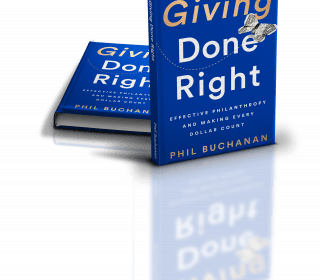
Phil Buchanan, Giving Done Right, (2019)

Giving Done Right is a result of Buchanan’s immense experience in attempting to make philanthropy more effective. This ideally takes places on multiple levels, from foundations to grantees but also between organizations and communities served. The crux of much of the work is fixated on creating more equitable and demand led philanthropy. Demand led philanthropy may sound counter intuitive to some. Caving to individual demands may seem to have more negative connotations but what is evident is that for too long the true needs of nonprofit organizations are not at the forefront of their generous benefactors thoughts. The opposite of demand led philanthropy, the supply led model, largely appears in the sense of donors and major foundations explicitly directing how resources should best be spent to benefit communities. Buchanan’s goal is to try and make a charitable gift as effective as it can be. For this to be the case it effectively involves allowing the expertise of those who receive the gift to do what they need.

Buchanan makes clear that none of his points are blanket accusations of all philanthropic relationships. However, it is difficult to avoid the somewhat patriarchal nature of traditional philanthropy at least in America. While Giving Done Right concerns this domestic situation, the international case is even more profound. Anyone engaged in some form of international development will likely have experienced a level of this supply led model where Western organizations or individuals have come in seeking to direct development. The distinction is that local residents and communities are not actually having input in these development programs. Separating the international sphere from the domestic philanthropy does not stop there being considerable similarities between main messages.

This book largely concerns guidance for how foundations and donors may seek to pursue more effective philanthropy. Clearly categorized, Buchanan offers the key guidance points summarized at the end of each chapter. These different aspects range from more equitable giving processes to foundation strategy and from partnerships to tools for giving. Some of the guidance offered may seem like common sense but that is the significance of this book. Obviously, a foundation should be aligning their own goals with the goals of the nonprofit organization and clearly, finding the giving method that suits your means best should be important but these are points among many other things Buchanan addresses. The guidance is provided even though it may seem common sense since it has often not been followed, many of the trends in major philanthropy follow traditional methods that do not make beneficiaries as effective in providing crucial and life changing products and services. Foundations have a huge significance in American philanthropy, just note the recent importance of all the Gates Foundation’s activities. However, Buchanan insists that they could be doing more (or at least do what they are doing more effectively) and this extends beyond just possibly granting out more money or relaxing restrictions on such funding. Foundations influence can lay groundwork for grassroots community organizations to provide better for their clients, or foundations could even provide technical assistance for organizations that do not have the resources themselves.

The general message one would take from Giving Done Right is that too often the power dynamic swings in favor of the donor. The ramifications from this dynamic are significant. Buchanan as the founding executive of the Center for Effective Philanthropy has spent years attempting to find innovative ways of addressing this relationship dysfunction. Notably the Grantee Perception Report (GPR) that goes someway to opening foundations to constructive feedback. Prior to such opportunities, organizations are shown to have been fearful of providing critiques in fear of losing funding. While Buchanan does address that this uneven power dynamic will not just disappear given that one side is receiving resources from another, the guidance offered is designed to mitigate the possible consequences.

A possible argument is that these extra steps make the process more complicated and foundations and donors may withdraw funding. However, more effective philanthropy benefits both sides, in this fact lies the true benefit of what Buchanan and the CEP is attempting to encourage. While a foundation could possibly lead their own programs and some have huge endowments in order to do so, the point is that in the philanthropic ecosystem many of the community organizations and smaller entities operate much closer to the pulse of American society. As such, if these community organizations were given more freedom and allowed to direct the resources how they needed then large scale improvements would be seen. This change can be seen as the traditional and large foundations and donors giving up a level of control to the expertise of the smaller entities closer to the communities that are the true beneficiaries.

Foundations can be characterized as the generous and older benefactors of the expert local organizations. It takes both the resources and giving spirit of the benefactor to enable the expertise to be effective. Furthermore, the expert local organizations are often operating on scale in which even a relatively insignificant amount of the foundation endowment could be life changing for their programs, products and services.

What it takes to be effective is not often new or different from what has characterized the most effective funders for the past century. The issue is that effective giving is not well enough understood and is exceedingly difficult to do. What it takes to be effective runs counter to current conventional wisdom.

Phil Buchanan, Giving Done Right, p.191

Without giving away every piece of guidance or lesson to take from this work the book offers an easy to digest insight into the complexities of organized philanthropy. There are notable examples, insights into current new trends in giving and most importantly how methods should evolve going forward. While this book came out in 2019 I believe it reaches an even more important relevance in the current pandemic and beyond into the post-distancing future.

Philanthropy is drastically contributing, improving and influencing current trends in the response to COVID-19. Making philanthropy as effective as possible will not only aid the current period of mitigation and treatment but more significantly the recovery afterwards. Small businesses, communities, services, families, individuals and many more aspects of society are shaped by philanthropy. It is necessary that the response from organized philanthropy puts those most significantly hit by the current crisis at the forefront of recovery efforts. In addition, it is important that this occurs through the local expertise rather than from larger powerful entities that may not be able to hear the needs of communities quite as clearly.

The Boy, the mole, the fox and the Horse

Charlie Mackesy, The Boy, the mole, the fox and the Horse (2019)

This wonderful book only came out 6 months ago but it has already been making a significant impact on social media as the story has pertinent messages for the current situation. As much an art piece as it is a story the beautiful style works well with the inspirational and heartwarming narrative.

Charlie Mackesy has an illustrious history and this book marked his first full length work. The story follows the unlikely companions on a journey that is as much about self-discovery as it is about getting anywhere specifically. Each have their own fears and concerns and together they build each other up and offer reassurance.

The book serves as a reminder to be as kind to yourself as you may be to others, it also consistently preaches the value to looking past fear for the opportunities that are hidden. As the mole says after freeing the fox that would otherwise have eaten him, “One of the greatest freedoms is how we react to things.” There is really not a lot to discuss in the book without giving away the whole story but while the story may be basic the unique combination of artwork with narrative makes for a profound and beautiful piece.

This book is a quick read but has messages that are memorable and relevant to the current situation. Remembering that this situation shall pass and showing kindness and love to others is the most significant theme of the story. Together we are all stronger.

The Boy, the mole, the fox and the Horse may not have the most advanced plot or a story that will get you engaged in reading for weeks but the simplicity of the book is actually a strength. The messages are poignant, the artwork beautiful and the narrative heartwarming. There is not much to review although I will say that this is now one of my favorite books.

You will find yourself quickly going through the story to see how the unlikely companions fare in their journey. The relationships between the four characters emphasizes the importance of love and kindness, at the current time this lesson is even more important.

All images are from the book and property of the relevant owners. Charlie Mackesy has also created a t-shirt for charity which can be accessed through clicking the t-shirt above.

His personal website is linked here.

Liberty’s Prisoners

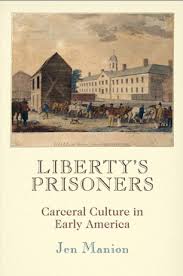
Jen Manion, Liberty’s Prisoners: Carceral Culture in Early America (2015)

This week’s post is in response to a book I was assigned for a class assessment. It is therefore more formal in its manner. It is already a challenge to get through a book a week in addition to class assignments so that is why this one is a good middle ground. The reviews of the book which also informed the post are all linked at the bottom of the post.

Jen Manion’s work Liberty’s Prisoners focuses on the creation of the first penitentiary in Philadelphia in 1790. More than this however, it identifies the variety of social factors that impacted the relative success of the penitentiary system and the culture that surrounded it. The title alone indicates this look beyond the structure to the systems culture. Starting with a look at gender, Manion observes how the penitentiary movement impacted social order, “moral reformation served as ideological basis…labor provided its economic justification…But the nature of the work also produced its own ideologies, including the fortification of a heterosexual political economy” (Manion, p.18). Her suggestion of the movement reinforcing the social hierarchy in its hetero-normative structure extends into the following chapter which more predominantly focuses on racial discrimination. The suggestion that the ‘imposition of sentimental masculinity’ not only inspired resentment in prison staff but also a ‘relationship of dependency’ really underlines the message of Liberty’s Prisoners (Manion, p.84). In all these aspects it is the elite white men that occupy the top tiers of the hierarchy. The calls that she identifies for women to return to the domestic sphere are indicative of the hierarchy she claims emerged around the prison system. Furthermore, Manion roots this suggested state in treatment of the poor and a reorienting of political life. The society that these changes took place in saw situations such that “Women on the streets who could be ‘spoken for’ by respectable men were not imprisoned, while single women who lived by the informal economy were frequently charged and sent to prison.” (Manion, p.91) These structures are all related to value systems and Manion’s chapter focuses on issues such as sex alongside poverty as areas in which women’s empowerment was possible. This liberty was however, extensively reserved for those within the upper reaches of the traditional society. Those at the top of the hierarchy largely avoided interactions with the prison system. Those that contravened the new norms were at risk of imprisonment and thus prisoners of this new liberty.

The merits of the book are espoused by all the reviews, there was not one which directly challenged the contents of the work. However, Ashley Rubin offers the most scathing opinion on the contents by suggesting that, ‘virtually every insight in this book has been discussed by another author, but Manion does not explain how her work differs from theirs.’ (Rubin p.369) This seems at odds with Saxton’s review in lauding the new examination of the presence of women and impact of gender. Saxton’s greater positivity reflects the journal she writes in being focused on women and gender. It is also though an expansion of Rubin’s conclusions. While Manion does sometimes fail to consider the prior scholarship the observance of women’s role in this culture marks the work apart from the predominant racial or class-based approaches. The more general approach of Rubin’s review therefore suggests that as a synthetic work the book is a much more powerful perspective on prison’s emergence (Rubin, p.370). While the two reviews therefore may seem to differ in their conclusions about the book they identify similar aspects of the work as laudable. Saxton does address the racial elements of Manion’s arguments as well as the influence of family and suggests that as a method of weaving in multiple aspects of societal roles and culture this offers a newer perspective that Rubin sees more as a synthesis of prior scholarship (Saxton, p.11). This is where Bell’s review substantiates both with the suggestion that ‘Liberty’s Prisoners is a welcome complement to Rothman and Meranze.’ (Bell, p.205) It is not the contents of the book that are challenged but rather whether it offers an original perspective that moves beyond just synthesizing previous studies. To Rubin and Bell Liberty’s Prisoners needs to be utilized in collaboration with other works while to Saxton the work offers a meaningful and holistic insight on its own.

The reception of the book while generally positive also highlights the scholarly attention to the early American penal system. Many of the reviews offer their own understanding of the environment that Manion discussed along with the reflection of carceral culture elsewhere in early America outside of just Philadelphia. Bell does address that as a study of Philadelphia specifically the work ‘easily surpasses those earlier studies’ especially in the approaches to gender (Bell, p.205). Conversely, Rubin in the more negative tone that her review takes suggests that the generalizations Manion employs detract from the otherwise interesting conclusions (Rubin, p.368). Again, drawing back to Rubin’s assertion that Manion fails to acknowledge previous work, Rubin documents that evolution of scholarly work on the topic. Furthermore, Rubin states that by treating ‘Walnut Street Prison, the almshouse, Arch Street Prison, Moyamensing Prison, and Eastern State Penitentiary’ interchangeably Manion downplays the significant differences (Rubin, p.368). Within Rubin’s review the full extent of literature available on prison reform and culture is illuminated. Rubin and Bell both acknowledge the significant external literature that informs understanding of early American ‘carceral culture’, the importance of Foucault in this discussion of general carceral culture among others is perhaps an extension of the previous discussion on whether the book offers a new perspective or simply synthesizes previous information (Rubin, p.368 & Bell p.201). The reviews effectively point the reader toward other works that would substantiate Liberty’s Prisoners and in doing so highlight how significant the variety of scholarly work that exists on carceral culture is.

Liberty’s Prisoners has a variety of reviews in terms of which aspect of the work is focused on. The merits of the book are in its weaving of multiple roles and aspects of carceral culture together. This is addressed in the reviews selected but they do diverge on which aspect of the book, whether it is gender, race or social standing. The nature of Manion’s work being a holistic approach with a focus on gender places it in range of critique of historiographical nature or generalizations. This is the approach that Rubin took with Saxton lauding the focus on sex and gender and Bell marking perhaps a middle ground between the two (Saxton, p.10). Furthermore, Bell does highlight that the resources Manion does use extends beyond previous scholarship that focused on similar areas of carceral culture (Bell, p.206).

Bibliography

Bell, Richard. ‘Liberty’s Prisoners: Carceral Culture in Early America by Jen Manion (Review)’, Early American Literature 52 (2017), pp.201-206

Kahan, Paul. ‘Liberty’s Prisoners: Carceral Culture in Early America by Jen Manion (Review)’, The Pennsylvania Magazine of History and Biography 142 (2018), p.118

Saxton, Martha. ‘Liberty’s Prisoners: Carceral Culture in Early America by Jen Manion (Review)’, The Women’s Review of Books 33 (2016), pp.10-11

Fletcher-Brown, Charlene. ‘Liberty’s Prisoners: Carceral Culture in Early America by Jen Manion (Review)’, Register of the Kentucky Historical Society 115 (2017), pp.419-421

Rubin, Ashley, ‘Liberty’s Prisoners: Carceral Culture in Early America by Jen Manion (Review)’, Journal of the Early Republic 37 (2017), pp.367-370

Some Strictly Unauthorized Presidential Poetry

Rob Sears, The Beautiful Poetry of Donald Trump (2019) *Strictly Unauthorized

A more eclectic book than any previous post, during this troubling time the poetry carefully curated in this work is as humorous as it is thought-provoking.

This groundbreaking collection will give readers a glimpse of Trump’s innermost thoughts and feelings on everything from the nature of truth, to what he hates about Lord Sugar. And it will reveal a hitherto hidden Donald, who may surprise and delight both students and critics alike.

Sears, The Beautiful Poetry of Donald Trump (Inner Sleeve)

What makes this book as funny as it is potentially worrying is that all lines of the poetry come directly from interviews, press conferences and of course tweets from the 45th President. They offer pertinent political commentary as well as insights into the psyche of the current commander-in-chief.

The edition I read is particularly interesting when the footnotes direct attention to the respective source for each line of the poem. The most personal and provocative work largely cites tweets but it is in the amalgamation of various sources that offer the most complex and interesting entries. In this anthology of Trumps poetry particular favorites will vary drastically on readers but the beauty of the work in each and every piece should be admired. My particular favorites include “I have the best words” (taken from a campaign rally in 2015), “Look at the way I’ve been treated lately” (graduation speech to coastguard cadets in 2017), and “I am open-minded” (Fox News Sunday, 11 December 2016).

I use both iPhone and Samsung

A great leader has to be flexible

“I am Open-minded”

What is clear is that the poetic potential of the current president has been underestimated and with this work everyone can start to remedy this travesty. It may have required the work of an editor to collect all these thoughts but the poetry aligns with what the President tweeted on 8 August 2013, “I am the best”.

Sears work really could go some way to address some criticism of the President, in his editors notes he provides a useful pathway to understand the complexity of all the poems within the book. Therefore while this will be a shorter report I will end by citing the poem he states will help readers who have a more critical approach.

“For readers who have trouble enjoying Trump’s poems because of their pre-existing views of his politics, one poem in particular, the Whitmanesque ‘You have to be everything’, is key.”

You have to be everything

I can be a killer and a nice guy

I can be very military. High rank!

I can be more presidential than anybody

You gotta say, I cover the gamut

I am pro-life

I’m a people person

I’m a king

I am a champion

I’m also very much of a germaphobe

I’m a counterpuncher

I’m President, and you’re not

I’m a person that very strongly believes in academics

I am a defender of Miley Cyrus

(Miley don’t let them get you down)

I am a handwriting analyst

I’m the world’s greatest writer of 140 character sentences

I am your voice

I am what I am

It is perhaps insane to consider that all of these things came out of the mouth of the current President. However, putting these into a poem creates a much more elaborate picture of the character behind the words. What we should now consider is how ‘I am a poet’ may enter the lines of Donald being everything.

This satirical work is incredibly well put together and well researched. Sears makes equally poignant and humorous points, some entries offer particularly important reminders of what the President has said in the past. This was an entertaining read but given its nature was also difficult to write a longer report. Regardless of political beliefs this is a profound book that offers something for everyone.

Create your own website, free on WordPress.com.Create your own website.
Start free