From Gilead, Iowa

Marilynne Robinson, Gilead (2004)

One long episodic letter from father to son, Gilead by Marilynne Robinson received much critical acclaim. It is full of symbolism and I would not have read it, if it were not for one of my classes at school. It has it moments that I enjoyed and the premise of the book is heartwarming. Reverend John Ame’s is writing a letter to his son as a form of biography, a history of both himself and others in the family. It is chronological in the way it moves through events and the symbolic and meaningful messages start when the letter covers a father and son journey to the grand fathers grave. John had things he did not get to say to his own father and the reader sees this section as the point of inspiration for this letter. As is clear this is a family guided by religion with the patriarchal line of the family all being ministers. The year is established as 1956 early in the book but events obviously take place over a period of time.

While well received critically and many listing it as one of the greatest novels ever written, I personally did not find it compelling. This may be partly due to the assignment nature of reading it for class but I just did not find it compelling. I will probably read it again eventually do see if my opinion changes. Nevertheless as I said earlier, there are heartwarming messages as well as deeper philosophical questions. Just the fact that John Ames is having heart complications and wants to ensure he does not leave his son in the same way he felt his relationship with his father ended is inspirational. Following from this the focus of the letter is also John reconciling events with his religious perspective. This is pertinent for many religious individuals and passing some of these lessons and teachings on to his son is laudable. In fact this is one reason why the novel was well received as it is said to be written to try and correct misconceptions of Calvinism and Puritans as well as understanding the lived experience of Christians more generally.

Other topics include the Civil War as well as slavery and the divide between the North and South. The reconciliation and differences of ideas and thought are prevalent throughout. John Ames references the learnings of atheists as well as philosophers as much as religious leaders and the bible. The letter follows his own turmoil and learning and through these seemingly conflicting ideas, he hopes to show his son how a way of life can still be enjoyed while respecting different opinions.

Ultimately, the way this book was referred to in class as well as the key messages that John Ames tries to put across correspond with trying to appreciate beauty and life. John Ames reflects a couple of times on the ability of his second wife to live in such a way. It is also possible that this comes as a result of him seeing his own life slowly coming to an end. The message is being present and his hope with the letter is to have a lasting artefact for his son.

Your mother told you I’m writing your begats, and you seemed very pleased with the idea. Well, then. What should I record for you? I, John Ames, was born in the Year of Our Lord 1880 in the state of Kansas, the son of John Ames and Martha Turner Ames, grandson of John Ames and Margaret Todd Ames. At this writing I have lived seventy-six years, seventy-four of them here in Gilead, Iowa, excepting study at the college and at seminary.

There are meaningful messages in Gilead and ones that are obvious and repeated. There are also relatable themes but the story just was not compelling to me despite both the themes and messages. There are fascinating sections on various aspects of 19th and 20th century American history which are more interesting. It is still a well written story of a family from a small Mid-West town it just lacks a driving plot that grabs my attention. On the other hand, I am aware that plot is not by design the main thrust of this book and therefore given its renown would still recommend it to others. I simply think I did not read the majority of this book in the right mindset or time to truly take from it what Robinson intends.

Mountains Beyond Mountains

Tracy Kidder, Mountains Beyond Mountains (2004)

Mountains Beyond Mountains considers the story of Dr. Paul Farmer and, what at times appears like a solo mission to provide the best healthcare and support to the poorest communities in Haiti, Peru and Siberia to name a few. Kidder writes from experiences both following Farmer as well as through regular communication. The book starts with Farmer’s childhood before transitioning to his life in public health and life long mission to help those that need it most. Despite the tough upbringing what is clear about Farmer from the early chapters is the precocious intellect as well as a fierce stubbornness and determination.

The location most visited and essential to understanding the complex person that is Paul Farmer is Haiti and specifically Cange. His wife is from Haiti and the original location for much of his work and organizational involvement stems from work there. Interestingly Farmer’s stance is one that questions traditional development practices in ways extending beyond the health sector that his work primarily addresses. Kidder draws the book to a conclusion with statements that effectively summarize Farmer’s methods and beliefs. The statement that stuck out to me was “I don’t care if we lose, I’m gonna try to do the right thing.” In the realm of development work and public health the actions of Farmer and his organizations, partners and programs all fly in the face of traditional measured approaches. The story contains countless examples where the problems tackled would not have been addressed without his genius and concerted consistent effort. Further, many actions were taken that if judged from a utilitarian perspective or understood in economic terms would have been roundly rejected by major international organizations.

A particularly heated and informative section concerns that of appropriate technology which in the setting of Haiti would have hamstrung Farmer’s efforts if he had indeed operated in such a manner.

Farmer in 2003

This person is sick, and I am a doctor. Everyone, potentially, can understand and sympathize, since everyone knows or imagines sickness personally.

The wonderfulness of Farmer’s approach is in its simplicity. Every patient is respected and worthy of dignity, no life is held in higher value and ultimately the location of birth should not be a factor that obstructs a patients access to quality healthcare. Appropriate technology underlines this situation, the infrastructure of Haitian healthcare does not lend itself to treating multi-drug resistant TB or offering open heart surgeries but as a result of Farmer’s efforts these are now reality. Under traditional models instituting these changes would be part of a slow and tedious development that would only widen the health inequity between nations. There is nuance to this state of affairs and global development literature points to efforts of Russian tractors in Ethiopia ending up unused among other initiatives as evidence that there is a need for appropriate technology. However, Farmer’s situation shows that this a fallacy if introductions are actually taken with careful reverence to local cultural environment. As the reader observes Farmer reconciling Western medicine with local witchcraft and voodoo beliefs it becomes clear how missing cultural specificity only creates frustration, distrust and ineffective programs.

This book offers a critique of traditional development wisdom, especially in the healthcare field and it is through the dogged work of Farmer that elements of global healthcare programs now operate the way they do. What is so inspiring and uplifting is his commitment to people and the dignity and worth of every individual he works with. As suggested this sometimes clashes with traditional models and processes of development but ultimately in the cases that Farmer was battling for he often came out victorious.

The reader gets to see Partners in Health (PIH) develop under the guidance of Farmer and this characterizes the narratives around challenging traditional programming. The flagship program concerning the treating of MDR TB (Multi-Drug Resistant Tuberculosis) that under WHO (World Health Organization) programming would remain untreated causing many in poorer nations to be developing far more dangerous and harder to treat strains. Farmer and PIH started to tackle and research this in Haiti before the program expanded to Peru, this also brought in work on AIDS as the virus suppresses the immune system and elevates the risk of diseases such as TB. This book has so many threads tangled together but the complexities are merely representative of how complicated it can be to adequately address public health. Furthermore it is only through an holistic program that true progress will be made. Far more goes into health crises in countries than just medicine.

This is an inspiring book and ultimately one that gives hope for addressing health inequities. It is also very graphic and there are the inevitable sadder sections were even the best efforts could not save a patient, a situation that Farmer himself sees as a point of personal failure. Ultimately many of the areas addresses in both Farmer’s life and touched upon in this book result from huge inequities in the world as well as a lack of consensus and thought out policy from developed nations on how resources can be redistributed. The anger which the reader sees from Farmer about certain situations certainly raises questions about how policy could better address the actual health crises. In addition, though it highlights how a more personal and locally based grassroots effort will inevitably generate better social health environments than bureaucratically created and overseen programming. Healthcare is a right and ultimately the state of healthcare inequity between nations means this is not necessarily true everywhere, in addition, it creates a situation in which some lives are distinctly valued less than others (read appropriate technology discussion!). I finished the book with a hope that changes will be happening as well as thoroughly inspired by the dramatic differences that Farmer and his associated efforts have created. At its root his efforts are rooted in the local communities and genuine relationships.

he’d insist, because if you say that seven hours is too long to walk for two families of patients, you’re saying that their lives matter less than some others’, and the the idea that some lives matter less is the root of all that’s wrong with the world.

A statement Kidder imagines Farmer saying

In a domestic, local and informal setting this has lessons of respecting others, understanding others despite different beliefs and looking out for the most vulnerable. Looking beyond self and doing the best possible for the greater good. During a global pandemic, the global health inequities will magnify effects and this book highlights these stark differences. It also offers a great background in subjects of epidemiology and public health that I did not previously have or understand. I would whole heartedly recommend this book simply for the great balance of biography with story-driven narrative.

Hills Like White Elephants

Ernest Hemingway, Hills Like White Elephants

Continuing the recent trend of short stories this is another selection from various suggestion lists. For next week I am reading Tracy Kidder, Mountains Beyond Mountains, I have already started but needed slightly longer to read it while having work and school assignments to manage.

Hills Like White Elephants is not like many of the other short stories that I have read and written about. Simply, it leaves much to the interpretation of the reader, in addition, it provides little context or background with the little there actually is requiring extensive extrapolation and analysis.

Set at a station in a valley by the Ebro river, one side of the valley is notable for the hills that look like said white elephants. The conversation takes place between ‘The American and the girl with him’, the status of relationship is unclear although it is generally accepted that the nature of the conversation concerns a possible abortion and the long term chances of the relationships. Finding out more about the story there is a critical understanding that the four possibilities could all be applied, having or not having the abortion and continuing or not continuing the relationship.

“It’s really an awfully simple operation, Jig,” the man said. “It’s not really an operation at all.”

The biggest issue with this story is that so much is open to interpretation that each and every interaction and detail can be subject to the readers perspective. The story has been interpreted as both anti-feminist and pro-feminist with the symbolism of ‘white elephant’ also consistently open to critical analysis.

I enjoyed reading the conversation that constitutes the story and it is clear that Hemingway carefully constructed each detail. Some critics even draw conclusions from the bead curtain and there are hugely symbolic elements that I was not aware of. Just the white elephant symbolism is meant to denote aspects of fertility as well as the unspoken issues that clearly exist within the relationship depicted within this story. It is not quite clear whether the abortion goes ahead or not but I was immediately struck by the juxtaposition of the girl and the man. The seeming innocence and youth of the girl juxtaposed with a cold logic and somewhat aloofness of the man. Critics point to a superficial relationship one in which an unwanted pregnancy has added the need for an emotional and real connection that the man is not interested in. I think it is difficult to miss the suggestion that the girl is significantly younger than the man, in this aspect, the relationship is exploitative.

As constantly suggested there is not a clear conclusion in regards to the decision of the girl or the man but that is part of what makes the story interesting. By the end it is clear the girl has made up her mind even if the reader is not entirely clear on exactly what decision this is. A follow up or sequel could very much have tied this story together but that is not the nature of Hemingway’s writing.

I think this a story that is ripe for literary analysis and it has already been pored over both such critics. It was helpful that I read the story prior to researching the analysis as I formed my own perspectives. Reading another’s opinion then made me revisit certain sections to understand these different perspectives. Considered one of the more significant short stories in literature, especially of Hemingway’s work this takes all of 20-30 minutes to read, however, reading opinions and re-reading certain sections and trying to form deeper understandings makes this a much more deeper and more involved story than on face value alone.

I am currently enjoying Mountains beyond Mountains for next week but this was a welcome break and encouraged me to think back to literature classes and deeper analysis of writing. The story is linked at the start.

The Celebrated Jumping Frog

Mark Twain, The Celebrated Jumping Frog of Calaveras County, 1865

Another short story by Mark Twain, this work is told from the perspective of a narrator retelling a bartenders story. The story could be considered a somewhat whimsical tale of a gambler Jim Smiley. The bartender simply tells the story to the narrator without any actual connection to the reason for the narrator interviewing him. Ultimately this unconnected story has a potential follow up that is short lived as the narrator comes to realize the bartender has no idea of the individual in question.

But, by your leave, I did not think that a continuation of the history of the enterprising vagabond Jim Smiley would be likely to afford me much information concerning the Rev. Leonidas W. Smiley, and so I started away.

At the door I met the sociable Wheeler returning and he button-holed me and recommenced:

“Well, thish-year Smiley had a yeller one-eyed cow that didn’t have no tail, only jest a short stump like a bannanner, and”

The whole story is almost framed as a prank by the narrators friend who insists asking Simon Wheeler, the bartender, about Leonidas W. Smiley would illicit grand stories.

I have a lurking suspicion that Leonidas W. Smiley is a myth; that my friend never knew such a personage; and that he only conjectured that, if I asked old Wheeler about him, it would remind him of his infamous Jim Smiley, and he would go to work and bore me nearly to death with some infernal reminiscence of him as long and tedious as it should be useless to me. If that was the design, it certainly succeeded.

The story that does follow is humorous and the tale of Jim Smiley and his frog while perhaps useless and boring to the narrator is entertaining to the reader. Wheeler starts by describing Jim and his gambling ways suggesting if he could bet on anything he would and if no one else would take the bet he would take the position to get the other person involved.

The frog named Dan’l Webster was picked from a swamp and Jim trained him for three months simply to be good at jumping. This section was entertaining to see Wheeler move into a tangent on the importance of educating and training a frog.

Smiley said all a frog wanted was education, and he could do most any thing and I believe him.

Apparently there was a market for betting on frogs ability to jump because Dan’l Webster attracted an audience and defeated any frog that he was placed against. That was until a stranger came to town.

Of course Jim wants a bet and having Dan’l who cannot lose makes a bet and even offers to get the stranger a frog of his own simply to have the competition. However, in leaving to get a frog the stranger weighs down Dan’l and unaware, Jim starts the competiton and Dan’l hardly moves. This turn of events is funny in Wheeler’s retelling as the stranger walks away with the money before Jim can figure out he was cheated.

And the feller took it, and looked at it careful, and turned it round this way and that, and says, “H’m so ’tis. Well, what’s he good for?”‘
“Well,” Smiley says, easy and careless, “He’s good enough for one thing, I should judge he can outjump any frog in Calaveras county.”

Following the conclusion of this story Wheeler is called by an anonymous source and the narrator takes the opportunity to leave but not before Wheeler calls to him, teasing another fanciful and crazy Jim Smiley story.

This is a fun and whimsical short story by Twain that ultimately led him onto bigger and better tales. I enjoyed reading the tale and the context adds to the humor, I would personally enjoy hearing another Wheeler anecdote about Jim’s yellow, one eyed cow with no tail!

Getting Better?

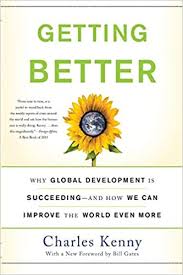
Charles Kenny, Getting Better: Why Global Development is Succeeding – And How We Can Improve the World Even More, Basic Books (2012)

Kenny’s intention with this book is to largely address an increasingly and ever present cynicism around international development. The issues surround Western dominated largely supply led initiatives that are seen to fail providing meaningful and long term sustainable development in developing nations. My main conclusion around this matter is that rarely is anything black and white, if international development or other areas of endeavor to improve the global human situation are viewed as such then the nuances that demonstrate success are obscured by an overwhelming sense of despair and futility.

Ultimately there is a troubled past in international development and the hierarchical power structures that dominate programs and projects has created a number of situations that hindered development. However, as Kenny gets to in his book there are other areas in which developing nations have truly seen progress in the quality of life for citizens. Again though, is this a result of intentional development policies or just an inevitable part of human progress?

The early chapters of this book are devoted to the bad and worse news for international development. Despite this they are tinged throughout with indicators of the direction the rest of the book takes. These indicators largely take the form of identifying the limitations of traditional measures and claiming it limits the negative implications around global development. This premise is established in chapter 2 which discusses ‘Diverging Incomes’ as bad news and is followed with the worse news of chapter 3 and ‘It’s Hard to Raise Growth Rates’. The essential problem that Kenny identifies is that utilizing income as a measure of global development success or failure is too reductive in its assessment of the development and quality of life in developing countries.

This leads to comparisons of estimated GDP measures between mid 19th century England and some Sub-Saharan African nations. While possibly at similar levels in income measures they are incomparable when looking at technology, life expectancy and other quality of life measures. This forms part of a conclusion that diffusion of technology and modern innovations are a much more significant indicator of global development success. It is difficult to argue with aspects of Kenny’s suggestion given that widespread technology has allowed people all over the globe to be more connected and healthcare to become increasingly affordable. An indicator used is infant mortality rate, nations in the mid-19th century that had comparable GDP rates to developing nations in the modern day, had much higher infant mortality rates than their modern comparisons. Kenny takes this to indicate the successes of global development.

However, while I came to conclude that there have indeed been substantial successes of global development as suggested with my statement in the opening paragraph, the problem has shifted to an inequity within development. Technological development is still lacking in developing countries and it is arguable whether a majority of the development seen is actually the result of intentional programs. While innovations available to citizens of developing nations may have been received as magic or witchcraft to the mid-19th century individuals who saw similar GDP levels in now developed countries, I do not think this necessarily marks a huge success of global development. Kenny does though make the key conclusion that more successful programs need to rely on the input of local communities and be more flexible. A supply led model does not lead to sustainable success it is rather a process of collaboration that allows local deployment of resources in addressing systemic problems. To use a commonly cited example, the Soviets providing tractors to Ethiopian farmers did not revolutionize agriculture largely due to a lack of infrastructure and training that just left the machines rusting in fields. Addressing structures and education have left much more significant development achievements than more direct programming such as road building or tractor provision. You may think that building roads will help residents in Kenyan villages travel more easily but what use are such roads if there are no cars? In affect, many development programs have fallen foul of limited initial research and failing to actually meet the needs of residents but met the needs of hypothetical villagers in the minds of Western program leaders.

Kenny suggests three points for future policy:

First, we should be humble – we are unclear as to the record and the reasons for Africa’s successes and failures (this applies as much to the thinkers of the Left as to those of the Right). Second, our view of African states should not be one of contempt for their failure. Only if we use a narrow, partial view of what “success” meant for the people of the continent can “failure” be the verdict without caveat. Given this, the West’s willingness to partner with African governments and African people should be based not on an assumption of unfettered superiority of approach but, instead, on one that recognizes the significant accomplishments of independent Africa to date. Finally, we should be realistic in the goals that we set.

This was a more optimistic outlook on global development than a lot of academics tend to perpetuate but there are undercurrents in Kenny’s sentiment that align with critics while remaining more positive. A consistent theme is that we know relatively little about development policy and approach that truly works. Another aspect being that we are aware that a universal approach most likely does not work effectively. The comparative to the situation in Africa that Kenny addresses extensively is the development in Asian nations such as South Korea and Japan. The situation effectively drew comparisons to the extent that measures taken in East Asian nations could be applied and see comparable success in Africa. We now know this was clearly inaccurate but looking back this is perhaps common sense. No one nation has the same situation and while it is certainly important that development aid and resource support is maintained this should not be undertaken in a manner that seeks to homogenize nations development and curtail cultural identity.

To me, this book offered a positive outlook on global development in a way that made me hopeful. While the past of the sector is mired in difficulty there is a growing consensus that the approaches need to change. Ultimately it is also difficult to ascertain progress when programs and initiatives take years if not decades to see sustainable change. However, this is a book that addresses the nuances and highlights positive elements of global developments. It is not a complete education of the sector but it does a lot to show where positive paths lie, namely in diffusion of technology, and locally led initiatives that actually meet grass roots needs rather than the desires of traditional Western donors and organizations.

The UN’s Sustainable Development Goals (SDGs)

Ultimately seen from a very basic perspective I believe everyone and anyone should have access and opportunity to lead a good and healthy life. Helping those less fortunate than oneself is a position of privilege but it is important not to let that privilege cloud how we can collectively help others. If there is a way to help others in developing countries have access to a higher quality of life then that should be a path explored but only if it is done in a comprehensive manner that actually takes into account the communities needs. The assumption that a Western donor knows best what a farmer in Sierra Leone needs is problematic and in case of aid can largely result in more harm than good.

A Dog’s Tale

Mark Twain, A Dog’s Tale (1904)

My father was a St. Bernard, my mother was a collie, but I am a Presbyterian.

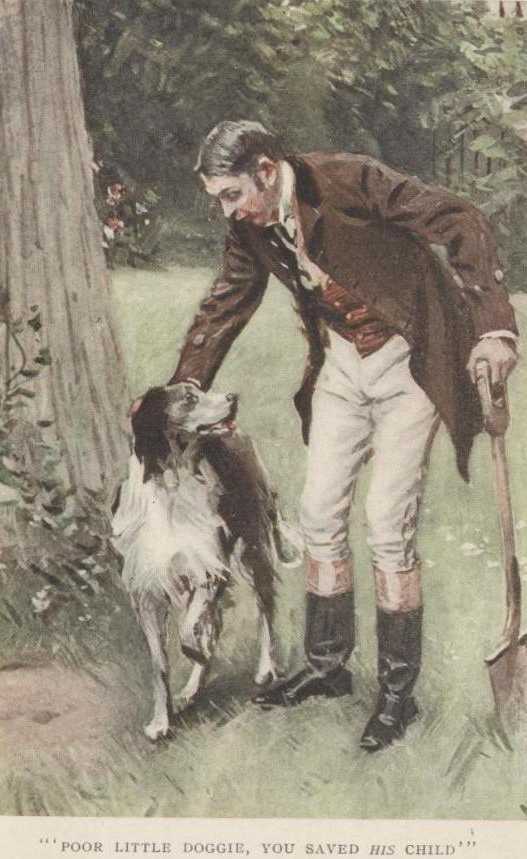
As a follow up to Eve’s Diary from last week I found A Dog’s Tale another Mark Twain work that went through the same treatment. Originally an entry in Harper’s Magazine it was adapted to book form by Harper & Brothers.

Written from the perspective of an unnamed dog and following its journey the story is both funny and sad in equal measure. The innocence and truncated understanding of the world from a dog’s perspective creates the larger sections of humor. The dog’s treatment by the family that buy her, while mostly good, also creates the space for sadness.

The early chapters address the learning from the dog’s mother with meaningful lessons such as leading by example. It is also fun to read how the dog’s mother was a relative intellectual repeating words and phrases she heard to other dogs and making them feel stupid. This is all the case even though the mother herself does not know the true meanings. The two words specifically mentioned being synonymous and unintellectual, both incorrectly defined.

When the family eventually buys the dog and the two are separated the emotive chapter has another meaningful message.

In memory of me, when there is a time of danger to another do not think of yourself, think of your mother, and do as she would do.

As the opening line points to, there are religious understandings and connotations broached in this story. The chapter addressing the separation of puppy and mother describe the nature of living for the ‘best good of others’. The dog’s mother teaches this value from overhearing these messages from sunday school and in effect emphasizes the dog’s purpose as living for their owners.

The Gray family that the dog is bought by are relatively well off. They have a young daughter as well as a new baby. Mr. Gray is a renowned scientist. The dog receives considerable love from the family other than Mr. Gray, including the servants in the house. The dog learns the ways around the house and a section goes toward this period of learning and acclimatization. After a period of time the dog has a puppy.

The pair are doted over by the family and servants with the story spending time describing the cute and innocent puppy.

The day which shifts the story from innocence and humor to sadness comes when a fire starts in the families nursery. While saving the baby the dog gets beaten by Mr. Gray as he misinterpreted what was happening. This turn of events leads to a large section of sadness and while the family can not find their dog they do not give up and eventually find her hidden away. Now aware of the heroism the dog is treated as such. It was emotional to see the recall of Sadie (the Gray’s daughter) crying out for her dog.

It is when Mrs. Gray, Sadie and the baby leave for a journey that the story winds down to its sad end. It is already clear that Mr. Gray is more of a callous figure, this section solidifies this. Mr. Gray and his friends have a debate about optics and experiment on the dog’s puppy. The callousness of Mr. Gray’s actions make him a villain of this story. The experiment does not end well and the doting love of the dog over her puppy is emotional given the lack of understanding of death. The servants are noted as incredibly upset at the turn of events and juxtapose the treatment and death of the puppy with the dog’s heroism and care in saving the baby.

The final lines concern this scenario as the other Gray’s are returning home to both the dog and puppy dead. It is the realization of irony that the dog served dutifully and saved the baby while seeing her own puppy killed that ties the story together. Their is consistent reference to the idea of heaven and animals not going there as they do not possess the same soul as humans. However, in this story the dog’s sacrifice is placed in opposition to the actions of Mr. Gray. The dog will lay by the grave of her puppy until she also passes away.

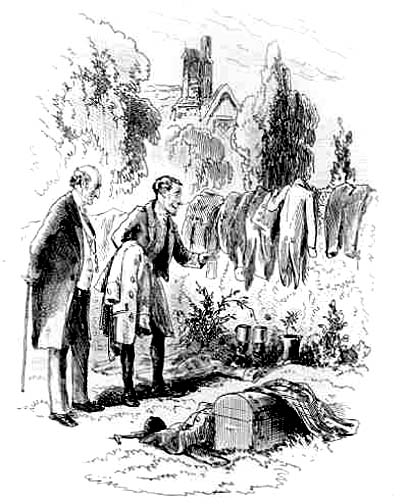
Wheresoever she was, there was Eden.

Mark Twain, Eve’s Diary, (1906)

Eve’s Diary was originally a Christmas release in 1905 and was then followed with a full book release in 1906. It is a supremely fun and comic story placing a humorous and personal perspective on events in the Garden of Eden. Primarily from the view of Eve the story becomes more involved as Twain introduces the perspective of Adam. The value of the illustrations is considerable in adding comedic value and providing contexts for Eve’s diary entries. It is definitely interesting seeing depictions of Eve with a Brontosaurus as well as riding tigers and elephants. This is still in the diary form so these more artistic excerpts are interspersed with Eve’s emotive and learning experiences as she comes to terms with her presence in the Garden.

I am almost a whole day old, now. I arrived yesterday. That is as it seems to me. And it must be so, for if there was a day-before-yesterday I was not there when it happened, or I should remember it.

Eve grapples with the concept she is an experiment and coming to terms with a lack of understanding of all the things around her. She does not yet know about the menagerie of animals in the Garden or how nature operates. However, this makes for some of the best passages about how the moon is being stolen every night or how water flows uphill. If the pool at the top of the waterfall never runs out but you see the water flowing down the waterfall during the day how does the pool never run out? The naivety of Eve in this situation is one of the most fun aspects of the story. Of course the reader understands the workings of the world but seeing the innocence and gradual learning of Eve is relieving and satisfying.

As she explores the Garden and comes to terms with both her role and the vibrancy of her surroundings she also comes to observe Adam. The diary depicts someone enamored with beauty while learning the natural workings of the world. This learning and curiosity is entertaining just as her description of Adam is.

I think it is a man. I had never seen a man…I realize that I feel more curiosity about it than any of the other reptiles…It has no hips; it tapers like a carrot; when it stands, it spreads itself apart like a derrick; so I think it is a reptile, though it may be architecture.

After a period of courtship and the two experiments getting closer the story moves to excerpts from Adam’s perspective. The most humorous section happens from his perspective with Eve suggesting domesticating a Brontosaurus and Adam responding with the impracticality of a pet that could sit down and crush their home. Adam’s perspective takes a much more utilitarian perspective in comparison to Eve and is much less appreciative of the surrounding beauty. However, the two perspectives converge on the state of their co-dependence. While Adam does not follow Eve or engage in the same curiosity, Eve likewise is represented as playfully curious but less practical. The pair come to compliment each other.

The diaries also consider the events after the fall from the Garden. The section concerning the love Adam and Eve have for each other is beautiful as well as humorous. While Eve laments the loss of the Garden she rejoices in her love for Adam and the sometimes illogical nature of that love itself.

If I ask myself why I love him, I find I do not know, and do not really much care to know; so I suppose that this kind of love is not a product of reasoning and statistics, like one’s love for other reptiles and animals.

This coming to terms of what it means to love is also questioned by Eve herself.

this kind of love is not a product of reasoning and statistics. It just COMES – none knows whence – and cannot explain itself. And doesn’t need to.

The diary ends forty years after their expulsion from the Garden with Eve’s death but depicting their beautiful and fulfilled life together. The final illustration shows a distraught Adam at Eve’s grave with the statement “Wheresoever she was, THERE was Eden.” This is a beautiful sentiment that can ultimately hold true for many loving relationships out there. While the story ultimately is funny for observing Eve’s experience of the Garden it is also romantic and beautiful in its way for depiction of the gradual escalation in loving relationship between Eve and Adam.

This is an easy read and enjoyable for the illustrations as well as the diary excerpts, a fun afternoon of reading! Writing a story from this perspective is compelling and I would certainly recommend it.

Tolstoy, Master and Man, The Ultimate Sacrifice

Leo Tolstoy, Master and Man, (1895)

The short story Master and Man acts as another example that could have made a chapter in Gunderman’s work from the previous week. In fact as the previous entry makes an example of The Death of Ivan Ilyich, Master and Man continues a key theme in the canon of Leo Tolstoy. This theme is the nature of sacrifice and service to others. Throughout this story the reader is consistently made to observe the difference not between perfect and imperfect individuals but rather one that lives in service to others and another whom simply serves himself. Nikita serves Vasili Andreevich (sic.) as a peasant that is renowned for his loyalty and committed service. Vasili on the other hand is the patriarch of a wealthy family and is fixated on his business dealings and wealth.

The premise of Master and Man is the journey that Vasili and Nikita undertake specifically to pursue a business deal in which Vasili is planning to shortchange the current owner. Tolstoy gives an insight into the way both men think and it is interesting for the reader to see the preoccupation of Vasili with how much he is going to save, profit and effectively shortchange the groves owner. This is drawn into sharp contrast with Nikita who has much more simplistic thought processes largely concerning how to best serve his master. There is a small introduction to the situation before the story moves toward the actual journey. To make the short story shorter the journey does not go to plan as the two along with their horse Mukhorty become increasingly drained and hindered by poor conditions. This negative turn of events does not immediately change the thinking of Vasili who remains fixated on his business deals while Nikita has to consistently make up for his masters mistakes, errors and stubbornness toward achieving his business deal.

As the blizzard hits them on their journey there were multiple chances for them to turn back to safety or rest but each time the greed of Vasili overcomes the logical option. Nikita willingly serves his master despite knowing of the folly of Vasili’s decision. It is frustrating for the reader to see the entitlement and prejudice of Vasili in his treatment of Nikita despite his own decisions leading to the two of them getting lost around three times.

Vasili Andreevich shook his head disapprovingly at what Nikita was doing, as in general he disapproved of the peasants stupidity and lack of education, and he began to settle himself down for the night.

It is perhaps a common trope of redemption in virtue deficient characters but Tolstoy does not indulge the reader in Vasili’s redemption until right at the end of the story. However, this redemption and internal realization occurs almost instantaneously for Vasili. This comes shortly after he actually attempts to leave his servant alone in the blizzard to die. However, he ultimately sacrifices his life for Nikita and notes an immediate warmth, ‘a peculiar joy’ the instant he acts to keep Nikita warm and in effect save his life.

The lesson from Master and Man is a repeat of the examples found in Gunderman’s work notably that life in service to others brings greater satisfaction and gratitude than any other form of service. Furthermore, Nikita having survived, lives the rest of his life being forgiving and passing on generosity to those around him. The ending of the story is particularly symbolic given the proximity to safety as Nikita and Vasili were only 70 yards from the road they needed and less than half a mile to the village. After wasting so much on greed driven decisions the two were incredibly close to survival but in this fashion Vasili reached redemption and made the ultimate sacrifice.

This is a classic of Tolstoy’s message driven literature and this is effectively the most extreme form of the gift of service. I believe any reader could understand the basic principles of this story and also be drawn into the actual progress of the journey. The main thread is the redemption of Vasili but there are other lessons to be taken from Nikita’s actions and life. Vasili is constructed as a genuinely dis-likable character and even in his redemption I found myself still holding the way he treated others against him.

Life in Service is a Gift

Richard Gunderman, We Come to Life with those we Serve, Indiana University Press (2017)

What do Victor Frankenstein, Ivan Ilyich, Albert Schweitzer, Rebecca, Benjamin Franklin, Alexander Solzhenitsyn, John Wooden, Bill Cook, Ebenezer Scrooge and Vincent van Gogh all have in common? Well in the case of We Come to Life with those we Serve they are all used as cases for different forms of service that are taken to define humanity.

Victor Frankenstein as the first example offers a useful platform for the cases that follow. The chapter that concerns Frankenstein has the subtitle of ‘The Life devoid of Service’, this serves as the starting point, if one lives not serving others then life is less meaningful and misses a key aspect of being human. The bulk of analysis in this book is literary in nature and addresses how characters or individuals acted in service and derived lessons for life.

The mixture of factual and fictional cases makes for a much more interesting book in addition to the short but complete analysis. The drive of the book as a whole is even clearer to see in the chapter discussing Albert Schweitzer as he is compared to Christina Onassis. Gunderman in effect continually searches for comparisons that point to the importance of service over materialism. Another key comparative that emerges and is especially significant in the case of Vincent van Gogh is the question of a short life engaged in service to an art or passion versus a long life merely lived. In the chapter on Schweitzer discussion of measuring the success of a human life takes a more prominent place. Throughout the cases the measure of fame is problematized, as well as, wealth and power. However, the thrust of Gunderman’s analysis is that these relatively superficial measures miss the most significant aspects of human life. Fame and wealth may bestow or have potential to indicate a significant life but far more people have a meaningful and fulfilled life without the trappings of wealth and fame.

Returning to the case of van Gogh, while now regarded as one of the greatest artists in history he died in obscurity at 37 having only sold one painting. While some may regard this as lost potential, the chapter ultimately shows the story of someone pursuing their gift and in this sense was there really a waste? Even while he died in obscurity the results of his labor was still spread around the world. In fulfilling his gift van Gogh undertook service to art and this service was redeemed as people appreciated the art, were inspired by the art and moved by the art.

Other forms of service noted through the book are more obvious forms such as ‘service to community’, ‘service through education’ and ‘service to family’. Similarly there are suggestions that might be surprising, ‘service through suffering’ and ‘service through commerce’. Therefore while volunteering time to educate others or coach a team may seem a evident form of service, there is also importance in serving while suffering. Alexander Solzhenitsyn is the case for ‘service through suffering’ and this is formulated on the basis of his battle with cancer and how suffering reveals ones true self. His writing Cancer Ward draws many important characteristics of this form of service and Gunderman identifies Elizaveta Anatolyvena as the key figure. She quietly and effectively does all the jobs otherwise rejected by others in the hospital and in the face of the suffering of patients simply engages in acts of service.

There are a number of lessons in all these case studies with many quotable sections largely about how one should live their life to help and elevate others. There is also a consistent presence of Christian faith and biblical messages. However, it is not overwhelming and the key message is the importance of helping others without the necessary expectation of return. This is essential in the case of Bill Cook. The idea of ‘service through commerce’ may seem antithetical in some ways, just as nonprofits and for profit organizations are sometimes placed at opposing ends of a spectrum. However, Gundeman does a great job through using Bill Cook as an example of why this dichotomy is at best inaccurate. The recent uptick in social enterprises and methods for corporate entities to give back is a reflection of some of these principles. Gunderman makes the accurate suggestion that in some cases the products, services and jobs provided are as much a public benefit than any nonprofit driven initiative. While there are motivational questions that could be asked of some corporate social responsibility progress it is difficult to question that some businesses provide services and products that do anything other than benefit society. In the case of Bill Cook and provision of medical devices there is an undoubted public benefit. Furthermore, the corporate culture is described in depth and effectively reduces a level of traditional corporate hierarchy and gives all employees a higher level of autonomy and independence. This is the most compelling chapter to me as it highlights that even in unexpected settings an individual can find a way to serve others.

This book is inspirational in the sense of trying to get the reader to rationalize their own lives and ways in which they either have served or could serve others. As it turns out, it can largely be in any setting and mostly just requires an individual to have a level of empathy that pushes them to want to help others. Further, it is through this service that in the cases described an individual can feel a greater sense of fulfillment. It is easy to find someone that has done volunteering work internationally and in some locations domestically that may suggest they learnt more from the experience than the hosts gained from them. Not a comprehensive analysis of development volunteering or philanthropy in general, this is simply a book that has the concise intention of motivating more individuals to live in service to others through any means. The argument is that through such service, stronger, healthier and more positive communities can be built.

Where’d You Go, Bernadette?

Maria Semple, Where’d You Go, Bernadette?, Little, Brown and Company (2012)

Compared to The Girl on the Train last week Semple’s work is wonderfully refreshing, inspirational and fun. Both are wonderful examples of their genre and just like The Girl on the Train, this book sold exceptionally well and was translated into a number of languages. While Hawkins work is thrilling and dark, Semple constructs a story that at times is equally thrilling and provides a much larger dose of humor. The story follows the genius architect Bernadette Fox as she faces daily struggles of not fitting in in her community in Seattle as well as trying to look after her daughter Bee (Balakrishna is her daughters full name). However, the story is not told from her perspective, rather through a series of documents, diary entries and email print outs. This method of exploring the life of Bernadette is fascinating as it gives an insight into the lives of those around her beyond any awareness she may have. This makes interactions much more entertaining as the reader sees the emotions and feelings of both sides. This book for the large part contains dramatic and soap opera-esque events and it starts with Bernadette’s interactions with the ‘gnats’. The ‘gnat’s’ are the other mothers from Bee’s school and particularly Audrey Griffin and Soo-Lin.

Building onto these early events the reader finds out more and more about Bernadette’s past. A recipient of the prestigious MacArthur award for her architectural projects while in LA, Bernadette moved with her husband Elgin Branch to Seattle as he transferred to the Microsoft office in the new city. Both are incredibly smart and Bee inherited this intellect. This state of affairs is clear and it is also apparent that the family is affluent even though their house is in disarray. The thrust of the story comes after an incredibly busy and stressful time for the family and led to Bee proposing a family vacation to Antarctica. The story really unfolds in the journey toward this vacation. The months leading up to the proposed vacation see a gradual unraveling of Bernadette’s life. Her hiring of a virtual assistant from India sees another intertwined story line. Just as intertwined are the interactions between Bernadette, Audrey and Soo-Lin as well as events at the Galer school that Bee attends. The reader also gets to see into the lives of Elgin and Bee more personally. While there are so many different subjects and story lines addressed they do all become drawn together on the main thread of Bernadette going missing.

Without giving away too much of the story the collection of documents, emails and diary entries actually turn out to be part of a book written by Bee about her mothers experience. This is also part of the story line of Bee and her path through school and time at a boarding school. Bee receives all these documents in a envelope around half way through the book so there are sections describing her construction of the book that is this book. If that seems confusing then in summary, Semple’s book is actually Bee’s book with diary entries providing context. Bee’s love and consistent pursuit for her mother after Bernadette’s disappearance is inspiring and the reader sees Bee standing up for Bernadette in the face of all the criticism she receives.

On top of the inspiring nature of Bee defending her mother, Bernadette’s own path is equally inspiring in a different form. The Seattle community Bernadette found herself in was not supportive and after finding herself in a slump she eventually finds her spark by the end of the book. Bernadette being a genius creative who became worn down by life and an unsupportive community as well as unfortunate events her own life story finally is fed up and escapes. The story reaches a relieving and comforting end as well as a promising one when considering the lives of the family.

Elgin Branch as Bee’s father is also a significant thread in the jumble of story lines. His story is equally interesting, although being a fairly absent father documents considering his story do not appear until later in the book. Elgin is a higher up in Microsoft working with artificial intelligence and his project Samantha 2 becomes highly referenced in sections of the book. Also included is his rise to fame through a TedTalk on Samantha 1 as well as the future of AI. What Semple does so well through Bee is creating a deep image of these characters, especially those that are the most important to Bee herself. Building on Elgin’s story is Bee’s clear contempt for the gnats (Galer Street mothers), one of whom (Soo-Lin) becomes her fathers assistant.

This is a fun and generally light-hearted book that will offer an escape from reality for most readers. There are the everyday frustrations seen from the perspective of Bee and Bernadette alike, then this is built up with the crazier aspects of the families lives. As much as The Girl on the Train is a wonderful book that I enjoyed reading, Where’d You Go Bernadette was a much more fun process. The story also has an air of mystery that kept me wanting to find out what happened. The presentation and style of this book also make it easy to read quickly with the various document forms truly adding to the enjoyment. Switching from emails to diary entries for example encourages the reader to empathize with specific characters and consider the various perspectives involved. I may have preferred The Girl on the Train but this book is also worthwhile reading for an escape from reality and a more smiles.

Create your own website, free on WordPress.com.Create your own website.
Start free