The Girl on the Train

Paula Hawkins, The Girl on the Train, Riverhead Books (2015)
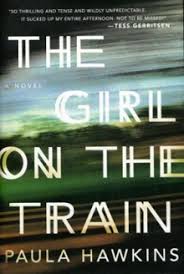
The Girl on the Train gripped readers worldwide when it was published and released in 2015 topping the New York Times bestseller list. This is with good reason as its reputation preceded my reading and it certainly fulfilled its reputation. The concoction of its major tropes and themes create a thrilling and compelling story that brings the reader along with the major characters and their perspectives on events. A mystery thriller with a murder case that occurs after a perhaps disorienting start, The Girl on the Train continues to build to a prolonged conclusion that gets the heart racing.

A key aspect of the story is the position of an unreliable narrator. Even though there are multiple perspectives there are different reasons in each case for the narrator in question to be considered unreliable. Hawkins weaves together three different perspectives as three women become increasingly intertwined in the events that unfold. The interaction between the three women creates a situation where the book has no real protagonist, although Rachel is the character the reader meets first and drives the plot. The plot moves chronologically almost in a journal format where events of the day and thoughts about the situation are described. However, when two of the three interact the events descriptions are seen from both sides. The wider net of individuals in this story are also often linked to more than just one of the women and play a significant role in how events unfold. The web of connections, relationships and interactions add complexity to memories of the events and this allows space for the reader to speculate and play their own detective role. While the murder case is the focus of the story, many side plots and twists give the reader opportunity to try and think about what the real truth may be.

It is clear to see as the story unfolds that it is building to a large climax where the reader and the narrators reach a significant point of clarity. The events crescendo to an action packed conclusion that draws together all the perspectives and possible loose ends. However, as suggested earlier it is the unreliable narrator that adds the additional layers to the story to make it so compelling. With the conclusion the reader finds out whether their own judgments were accurate.

The reader will likely empathize with the three protagonists at different times and through all the unfortunate events that befall them. The twists that are hugely impactful on one of the three protagonists do not necessarily even effect one of the others. This fact largely results in a consistently eventful book even if it is clearly building to a larger climax. What this also means is that the pace of individual perspectives do not necessarily align, this separation of perspectives actually engaged me more in the story as I tried to piece the events together like a puzzle. Thinking about this book further I found a similarity to the recent movie Knives Out. It is also a murder mystery with a number of characters having distinct perspectives and motives that built to an eventful conclusion. Both Knives Out and The Girl on the Train made me empathize with certain characters and want to work out how one was guilty or which recollection of events was more accurate.

There are also a number of gripping sections where my heart felt like it skipped a beat and to me this is a sign of a great book. Short punchy sentences following extended sections of dialogue or duller paragraphs that lull you into a sense of security suddenly shattered. I do not think anyone can truly see the ending coming in this book early on, although there are signs and signals and by the end there is some relief as it became increasingly clear who was responsible. There are themes that are relatable even though they may be depressing in nature. There are also lessons about the red flags of abuse in relationships and manipulation.

Emily Blunt in a still from the movie adaptation

The Girl on the Train is rightly recognized as a brilliant book. The style and plot complement each other to create an engaging story that keeps the reader attentive to the plight of the three women. Furthermore it is paced individually per perspective which adds to the complimentary style and plot. Events in each of the three perspectives could be separate stories even though they end intimately intertwined. The conclusion is a satisfying ending to the twists and turns of the story. It is a story that has elements that may be relatable as well as moments of darkness. Ultimately it masterfully covers essential characteristics of a murder mystery thriller and The Girl on the Train has now become one of my favorite books. The reader only ever knows as much as the narrator and in each case it seems aspects are missing from the narrators stories. This situation makes the book as a whole more compelling. It is no surprise after its success that it saw a movie adaptation fronted by Emily Blunt.

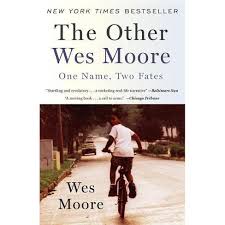
One Name, Two Fates

Wes Moore, The Other Wes Moore, (2011)

“Do you think we’re all just products of our environments?”…

“I think so, or maybe products of our expectations.”

“Others’ expectations of us or our expectations for ourselves?”

“I mean others’ expectations that you take on as your own.”

This particular conversation between the two Wes Moore’s is ultimately the theme of this whole book. Written from the perspective of the Wes Moore who served in the military, became a Rhodes scholar, and a White House fellow this story juxtaposes his own roller coaster of a life with that of identically named Wes Moore who ended up in jail for his role in a robbery and murder. It reduces the significant story of the “Other” Wes Moore to just focus on the ending as his life has many ups and downs that would otherwise be obscured. In some ways this is why the book is so compelling, it is a raw, at times depressing, but also inspirational story. The two men may not on the face of it seem to have much in common if you just judge their position at the end of the story. However, the similarities in their childhood (they grew up in the same Baltimore area less than a couple of blocks away from each other) and circumstances lead to the conclusion that while their paths diverged drastically the endings could easily have be reversed or dramatically different. This is the situation I believe influences the discussion quoted at the beginning of this post. How did the other Wes Moore end up in such a dramatically different situation to the author? If they had much of the same environment growing up, was it indeed expectations that shifted their eventual path? Ultimately the book does not actually answer this but it does offer a relatively complete image of the way events as well as those around oneself can drastically alter the direction of ones life.

This is the story of two boys living in Baltimore with similar histories and an identical name: Wes Moore…Our stories are obviously specific to our two lives, but I hope they will illuminate the crucial inflection points in every life, the sudden moments of decision where our paths diverge and our fates are sealed. It’s unsettling to know how little separates each of us from another life altogether.

Have you ever found yourself wondering what would have happened if you had made a different decision in a certain moment? This book in a way offers a real life example of this thought. Both Wes Moore’s go through immense struggles and the author constructed this book through interviews with his name twin. Together they both show a difficult family environment as well as the challenges of growing up in Baltimore in the 1980s. A racially charged environment with drug problems and under-investment in education and other support measures defined communities in the area the two Wes Moore’s grew up. The author is seemingly most shaped by his time at military school and while resistant at the start the move got him out of the environment that shaped the other Wes Moore. Both struggled in school but while the authors mother pushed him to continue and eventually moved him to military school the other Wes Moore had the influence of his brother which drew him into the drug trade. The explosion of crack cocaine in the 1980s-1990s saw significant opportunities for money and the other Wes Moore saw himself fall into a position early in life that this grabbed his attention. While the other Wes Moore’s brother Tony actively tried to discourage him from entering the trade that Tony had a significant influence in, it was to no avail as the need to provide for his children as well as the children’s two mothers overcame his attempts to eventually leave the trade. The sections on this aspect of life for the other Wes Moore are the most exciting of the book although it is also depressing to read about the addiction, violence and death that come with the drugs trade. I found myself willing the other Wes Moore to stick to his commitment to escape the trade but unfortunately knowing the ending leads this hope to be short lived.

The author though is a much more conventional story line with the overcoming of struggle leading to significant success. At the beginning the two stories are very much running parallel but as they diverge the switching between the two Wes Moore’s becomes more and more of a stark and depressing comparison. It almost seems that when the author saw a moment of significant success, the other Wes Moore experienced another arrest or run-in with the cops. There are many specific events within the two Wes Moore stories that deserve to be read and as stated the juxtaposition of the two stories makes this book incredibly compelling. Reading the story of the other Wes Moore in moments highlights his potential which ended up under-utilized as a result of the path his life took. While the insinuation seems to be one in which the author could have ended down the path of the other Wes Moore and vice versa there is another conclusion that both could have ended up being successful. That to me was the most depressing conclusion of the book, that so much talent never gets/got to see its true potential as a result of so many obstacles that both Wes Moore’s describe having to face.

The authors closing remarks are perhaps the most indicative of what this book effectively teaches.

The chilling truth is that Wes’s story could have been mine; the tragedy is that my story could have been his. My only wish – and I know Wes feels the same – is that the boys (and girls) who come after us will know this freedom. It’s up to us, all of us, to make a way for them.

The precarious nature of life and how such small decisions can lead someone down a path are all exposed within The Other Wes Moore. The concluding ‘Call to Arms’ section hinges on this idea of a sense of humanity in providing more equal and equitable opportunities to those children who may be growing up in the same situation as the two Wes Moore’s. While sections may be depressing there is also hope and inspiration so this is not a book to avoid if it sounds like it will just be sad.

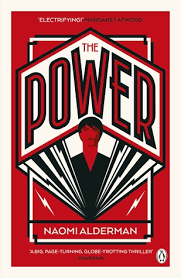
A World run by Women

Naomi Alderman, The Power (2017)

The day of the girls has arrived – but where will it end.

Naomi Alderman, The Power

The Power is a fascinating book as the language of the patriarchy is reversed following the awakening of an electrical power in most women across the globe. It is important to note that it is most women rather than all women as this factor shapes the society that emerges. As the most compelling dystopian novels tend to do, Alderman creates a society that hinges on a distorted version of the same contemporary societal trends. With the awakening of an electrical power in an organ called the skein the world sees a rapid change in power structures. There are a variety of nuances to these societal changes and the reader observes them through the perspectives of a handful of figures including a male journalist, Tunde. Framing the developments through a multitude of perspectives allows a more complete picture of how different people adapt to the new structures of power in the world. The results are a flipping of traditional hierarchies and the ongoing battle for power from those that wish to preserve the old ways and those welcoming in the new.

It is more interesting though when reading to consider how traditional language has been reversed in the story. Stereotypes and gendered language become reversed as power shifts to women with the the most powerful skeins. The shift to a matriarchy from the patriarchy may initially seem a significant one but it swiftly becomes clear that the former is merely a reflection of the old traditions. All the traditional language becomes female dominated but this does little to actually change the structure of the hierarchies. Fundamentally the book shows the corruption of power and while it is fascinating to read this from a flipped perspective the events that unfold are not dissimilar to those experienced in the male dominated world. What The Power shows aside from the compelling dystopian story is an intricate critique and commentary on the nature of power itself. The story represents an overthrow of centuries if not thousands of years of patriarchal attitudes and language. However, what emerges is a similar structure expressed through a matriarchy.

The collection of protagonists that all become intertwined in each others stories are compelling and all are essential in shaping the new society. There are dark moments in the story which are necessary to show the individual characters motivations. There are also surprising twists and revelations that occur through the gradual corrupting nature of power. Some of the snippets from reviews that come on the back of the book summarize these essential aspects of The Power.

‘Irresistible. Holds a mirror up to the here and now.’ (Mail on Sunday)

‘A fascinating look at what the world might be like if millennia of sexism went the other way. Ingenious…deserves to be read by every woman (and, for that matter, every man.)’ (The Times)

Personally it highlighted some evident flaws in the attitudes of a patriarchy and represented a commentary on the absurdity of some of those attitudes. Furthermore, it highlights levels of corruption that come with power. The shifts of language that emerge with events in the book as the first review suggests, holds a mirror to the here and now. The exposure of stereotypes and how easily these shift is also a fascinating element of the story that flips traditional gender roles. Interestingly, as noted not all women have the power and some men do have a sliver of it. This is a key element to parts of the story that act as close commentary on such gender roles. Expectations of boys and girls born into the new society are addressed, as are the new marketing angles that emerge with a shift from patriarchy to matriarchy.

In some ways this is a feminist book, in other ways it is a dystopian fiction and in a lot of ways it is a commentary on contemporary society. All of this together combines into one of the most compelling fiction books I have read. It prompts questions as well as reflections on the state of gendered language, stereotypes and power corruption. While elements may be uncomfortable it is not a conventional dystopian novel as it plays on many of the forces and trends that are present in contemporary society. It reflects the possible outcomes of a shift in power structures as well as the problems of such structures. Even with the major shifts that occur in the story the hierarchies still create many of the same problems that already existed under the patriarchy. This is a book that has so many layers to it that it could be read multiple times through many lenses and still nuances would be missed.

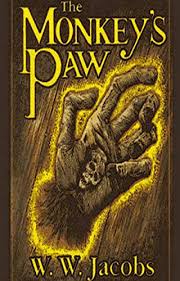
The Monkey’s Paw

W. W. Jacobs, The Monkey’s Paw, (1902)

He went down in the darkness, and felt his way to the parlour, and then to the mantelpiece. The talisman was in its place, and a horrible fear that the unspoken wish might bring his mutilated son before him ere he could escape from the room seized upon him, and he caught his breath as he found that he had lost the direction of the door.

The Monkey’s Paw is an essential of the short story genre. It is also an essential of the thriller/horror genre and is full of suspense and deeper messages. The premise of the story is well known but having read this years ago it was interesting to re-read it with greater attention and awareness.

The story begins with the backstory for the mystical artefact, the monkeys paw that only possesses its ethereal nature due an old fakir in India. The paw is brought to the White family by a sergeant-major whom had already experienced the dangers of the wishes. There is a lot of dramatic foreshadowing in the story with the sergeant-majors description of the fakir’s enchantment.

“It had a spell put on it by an old fakir,” said the sergeant-major, “a very holy man. He wanted to show that fate ruled people’s lives, and that those who interfered with it did so to their sorrow.”

With three separate individuals granted three wishes the inevitable conclusion of the story is unsurprising and ultimately fulfills the fakir’s intention. Greed is a theme throughout this story with any reader perhaps questioning whether the family truly listened to the sergeant-majors tale after Mr. White rescued the paw from the fire. However, it is the possibility of wishing for wealth, fame and happiness that draws Mr. White to save the paw from the flames.

Mr. White’s personal admittance that he does not know what to wish for and has everything he wants is a perfect setup for the sort of lessons that the fakir intended. At that point, all of his wishes are likely to be a form of greed and challenging fate. The classic question of ‘what would you wish for if you had three wishes?’ is therefore problematized in The Monkey’s Paw as the unforeseen consequences of the persons wishes come back to haunt them. In some ways this could also be seen as a personally realized butterfly effect. This is not the only story that uses such a trope and it is not rare for the aforementioned classic question to expand to a discussion of the implications of specific wishes.

There is a somewhat ambiguous ending to the story but while the first and second White family wish are verbalized the third is unspoken. The reader should be able to infer what the third wish is, and therefore, the significance of the conclusion but there are further connotations to this passage that are important. The story is heavily anthologized as a result of the various literary analysis that can take place and is also adapted to the screen for its gripping tale. The ultimate message of the tale epitomizes the statement, ‘be careful what you wish for.’

The story shares many common themes with other stories of its genre. This is however, one of the essential short stories that is also not difficult to understand or follow. The mix of suspense, horror and supernatural are blended seamlessly. The reader is made to question their own choices in the same circumstances and raises the possible impact of unintended consequences. A quick wiki search shows a list of 29 digital adaptations/influenced works (including a Halloween episode of the Simpsons) as well as a number of literary works inspired by W. W Jacobs short story. It is unsurprising that the story would inspire this amount of work as the core concept of the story “The Monkey’s Paw” is easily adaptable.

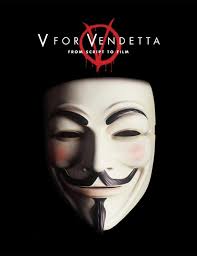
V for Vendetta

Alan Moore & David Lloyd, V for Vendetta, (2008)

Originally first run in 1982 as a series of comics and published over a span of years the compiled edition first released in 2006 collects three books into a feature length comic book. V for Vendetta is perhaps most closely associated with the Guy Fawkes mask that the protagonist ‘V’ dons throughout the story. Having been a huge fan of the film I was excited to read its inspiration. This original did not disappoint, with the same philosophical points and dark imagery and visuals that made the film the success it was. Seeing the segmented fashion of the book in comparison to the film was an interesting difference through the three books of ‘Europe after the Reign‘, ‘The Vicious Cabaret‘ and ‘The Land of Do-as-you-please‘. The separate chapters within these books are aligned with the original separate comic issues in the compiled edition, a nice fact that shows how the story was initially released and paced. It has been a while since I have watched the film adaptation but there are some differences between it and its literary material.

While there are many allusions throughout the story, perhaps the most significant is the 5th of November and Guy Fawkes. An English tradition, bonfire night has been celebrated since November 5th 1605. Interestingly it celebrates something not happening as King James was not blown up by a group of Catholic conspirators. Guy/Guido Fawkes was part of this group as they laid explosives under the House of Lords to blow up parliament. However, the plot was foiled and guards found Fawkes guarding the explosives. The public were allowed bonfires to celebrate the foiling of the gunpowder plot and this tradition has since continued with an effigy of Guy Fawkes often placed on top of the bonfire. This allusion in V for Vendetta is pertinent given V’s target which was to bring down the oppressive government structure.

Remember, remember the fifth of November,

The gunpowder, treason and plot,

I know of no reason why the gunpowder treason,

Should ever be forgot.

(V utters the classic 5th of November rhyme as the Houses of Parliament are blown up)

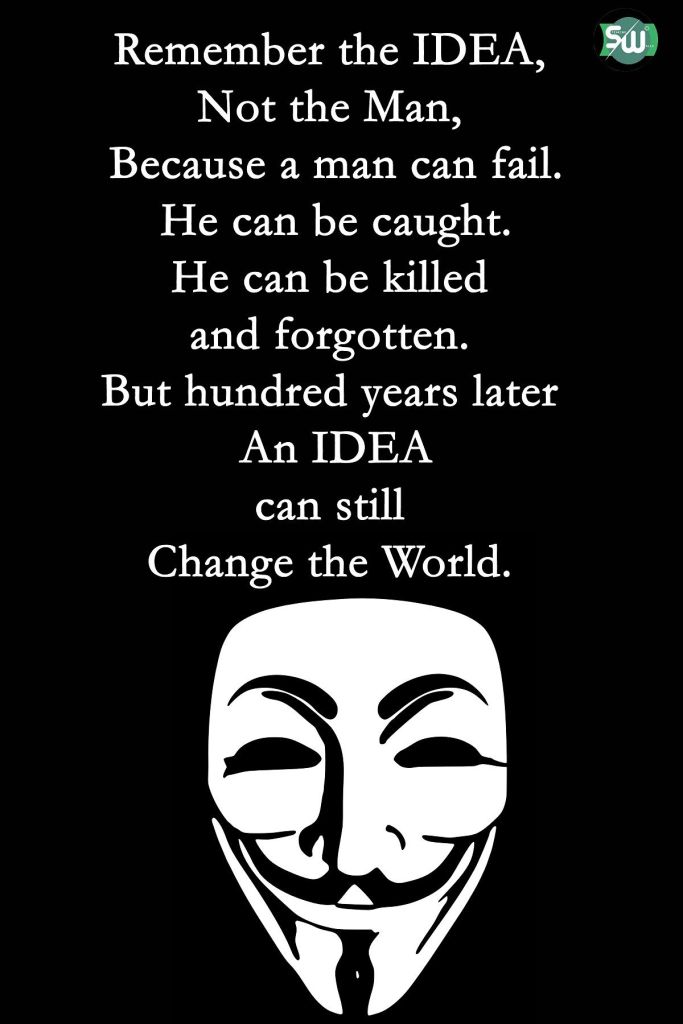
As a victim of the Norsefire regime, V seeks vengeance, creating a vendetta (observe the clever title!) The protagonist not only seeks a revolution but also revenge for the figures who oversaw his treatment in the regimes concentration camps. As the story follows this path the iconic figure of V begins to assume even more of a significance. The seemingly all powerful regime begins to crumble through the actions of one individual and in turn this inspires others. V embodies an idea and as the protagonist himself states:

Ideas are bullet-proof.

While the ending of the story is not clean-cut there is the clear concept that by embodying an idea V inspired the population to challenge the regime. The story ends as the revolution has only truly begun, however, what it does show is the importance of a clear idea to believe in. V for Vendetta has clear warnings against regimes preaching xenophobia and repression and is hugely significant in modern political discourse. The themes and trends of the ruling party in this story should be considered in the modern day.

The Norsefire regime not only repressed education and knowledge but they also eliminated opposition. The rise of such a party out of turmoil is covered in the flashbacks within the story and this counter-factual history style has always been fascinating to me. There are historical precedents as well as pertinent modern day comparisons. This book can almost be seen as a textbook on how autocratic regimes come to power and stay there. However, almost as importantly it also presents an image of hope, the importance of an idea and the ability of people to resist and persevere in the face of oppression.

The dark style and somewhat depressing subjects of the story are complemented by the significant concepts addressed. This is a must-read/must-watch film and story combination, it raises important questions as well as showing the importance of challenging authority. It also offers counter-factual history lessons in the emergence of fascist, authoritarian, police-state ideals and how they can come undone through ideas and the power of people. V for Vendetta is hugely significant culturally with the mask itself a symbol of the Anonymous group. This is itself part of the idea that V embodies, a collective, the concept that anyone and everyone could be V but it takes a common idea for this to happen. This idea is visually represented in the film more so than in the book but the reader does follow V’s protege Evey gradually coming to terms with the concept.

I had not realized that the film was actually based off a series of comics when I first saw it but I am glad that my friend lent me this book after I noticed it on his shelf. The book actually covers the stories environment and history much more fully than it is represented in the film. This to me made it a more engrossing read. Unfortunately there are also themes in the book that can be observed in the current day and this can make it slightly depressing. Nevertheless, V is an idea, a point of hope and as such it is not a wholly depressing book but one that ends with hope of a positive future in the world depicted.

Communicating without Words

Joe Navarro, What Every Body is Saying. An Ex-FBI Agent’s Guide to Speed-Reading People, (2008)

This week is a shorter review due to being a specific non-fiction offering. Nevertheless this was a loaded book with brilliant insight into nonverbal communication. The use of figures, examples and case studies only serve to strengthen the comprehensive scientific insight. I would have to read through this book multiple times to truly comprehend and grasp all the aspects of Navarro’s teachings.

The book is structured through the points of focus for nonverbal communication. Starting with the feet and legs before moving up the body and finishing with the most in-depth sections on the face, hands and arms. The attention to details is unsurprising given the multitude of micro-communications such as a small squint or slight tightening of the jaw. As the image shows above, each of the marked sections ultimately has its own language. Navarro describes what each of these could be suggesting before such images are then used to show an example. This is often then followed by fascinating cases that he was involved in during his time as an FBI agent.

I personally enjoyed the stories of these cases as much as the scientific discussion and there were also many important ramifications to such cases that had to be considered. Legal precedent is consistently raised in the cases that Navarro discusses as forms of nonverbal communication do not necessarily have significant legal recognition. It is through these cases though that his storytelling becomes so compelling as serious cases are blown open by his ability to recognize how someone is truly feeling. He does also make clear that reading body-language does not give definitive answers but only informs how certain situations can be better managed.

This book effectively exposes the variety of ways in which humans can betray their true feelings or reactions. It is fascinating partly because of the science but also because of the cases that Navarro uses to demonstrate its importance. This work is commonly seen as a leading example of psychology/behavioral science book and it is not heard to see why as you read through it. It is comprehensive in covering various forms of non-verbal communication along with the literature and studies that back it up. It is also easy to follow and compelling in its use of figures and case studies.

Nonverbal communication can also reveal a person’s true thoughts, feelings, and intentions. For this reason, nonverbal behaviors are sometimes referred to as tells (they tell us about the person’s true state of mind). Because people are not always aware they are communicating nonverbally, body language is often more honest than an individual’s verbal pronouncements, which are consciously crafted to accomplish the speaker’s objectives.

They is little to review without an extensive background in nonverbal communication but as suggested this is still a very interesting book for everyone. Personally, it highlighted how important nonverbal communication can be and as a result how the same message can be received differently depending on the person. At the moment, and in the future, with ongoing Zoom meetings and less face-to-face interaction it will be interesting to see how the importance of nonverbal communications changes if others cannot see the full extent of possible tells.

This book teaches skills and encourages greater attention to detail and does so in a way that could make the reader much more self-conscious about the way they communicate. It is a leading book of its kind and any reader should be able to tell as such.

The Most Dangerous Game

Richard Connell, The Most Dangerous Game (1924)

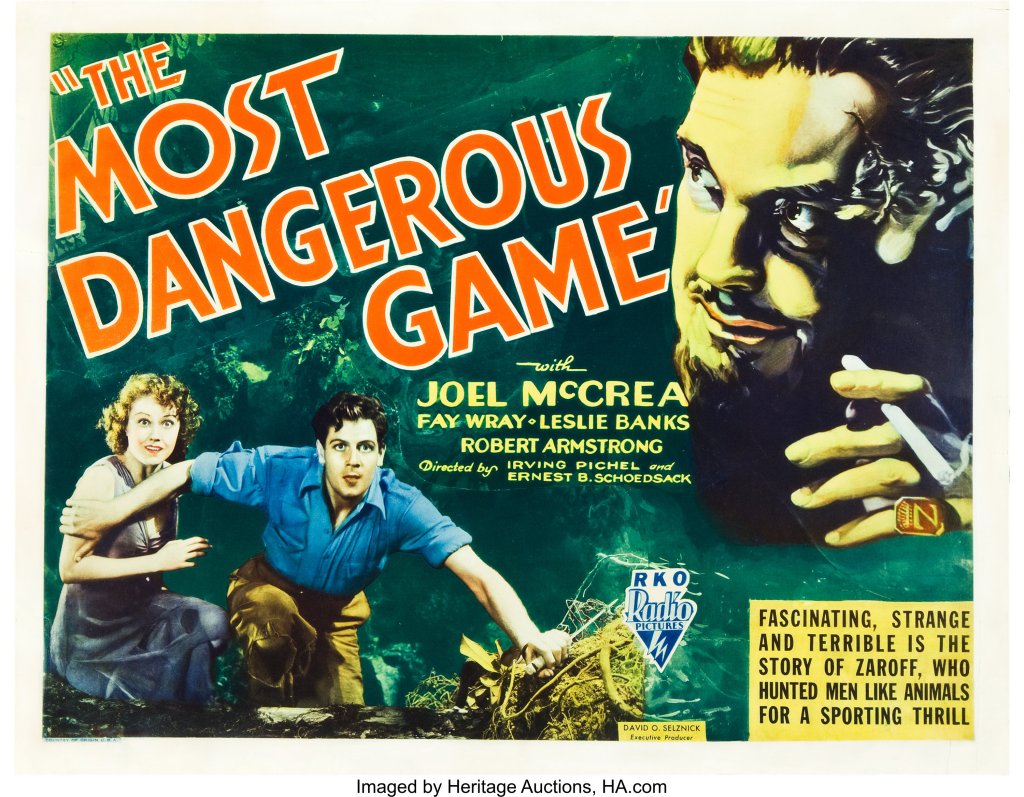
The Most Dangerous Game recently entered the public domain. It has been the most interesting and compelling short story I have read up to this point in the year. The premise of hunting the most dangerous animal (humans) is clearly inviting enough for a modernized Quibi digital adaptation. Reading through this short story it is certainly possible to see the potential that it could be drawn out to a full novel length work. The 15 episode Quibi adaptation certainly seems to be representative of this concept, however, the short, snappy and action packed story makes this an easy and engrossing read.

1932 Film Adaptation Poster

The short story will evoke images of other shows and novels with the tropical island, eccentric villain and battle of wits. The fact all this takes place in a short digestible story is partially the reason for its popularity. It won the O. Henry Memorial Award for short fiction in the year of its publication (1924).

The story starts with Sanger Rainsford landing on the island and being amazed as he wanders into the estate of General Zaroff. The conversation about the most dangerous game is a fascinating exchange as Rainsford gradually realizes the true nature of the generals hunting.

“But no animal can reason,” objected Rainsford.

“My dear fellow,” said the general, “there is one that can.”

“But you can’t mean–” gasped Rainsford.

“And why not?”

“I can’t believe you are serious, General Zaroff. This is a grisly joke.”

“Why should I not be serious? I am speaking of hunting.”

“Hunting? Great guns, General Zaroff, what you speak of is murder.”

The story is set up almost in three sections; the introduction of Sanger Rainsford and his arrival on the island, his meeting with General Zaroff and the establishment of the stories premise, and then the hunt. As consistently suggested the story does not take time in vivid descriptions or extensive contextualization but it is very evenly paced given the significance of the final section. The scenario of the hunt is effectively a high stakes (life or death) battle of the wits but in a highly unbalanced power dynamic of hunter and hunted. One of the most gripping sections of the story are Rainsford’s attempts at slightly reversing this power dynamic. The hunt this time takes a different path to the normal victims of General Zaroff’s game as both Rainsford and Zaroff are well matched in wit and knowledge.

While the hunts conclusion would seem to be the right point to finish Connell adds a characteristically concise addition. A conclusion which suggests that in this case the game is not over until the hunter or hunted ends up dead. While the story itself is not difficult to follow, there is considerable room for analysis. Perhaps foreshadowing the conclusion Rainsford notes to his assistant before he falls from the ship and swims to ‘Ship-Trap Island’, “The world is made up of two classes–the hunters and the huntees. Luckily, you and I are hunters.”

The Most Dangerous Game would make a great story to analyse in an English class. The discussion of humans as the most dangerous game and the precarious hunter and hunted dynamic drive the plot. It is a plot that compels the reader to continue reading and given the short punchy nature of the story it is not difficult to find yourself at the end quickly. There are intriguing narrative sections scattered with profound thoughts and expressions. Now this story is available in the public domain it is freely accessible to all and should be high up on any readers list given you could get through it in an afternoon.

Find The Most Dangerous Game here.

The Tell-Tale Heart

Edgar Allen Poe, The Tell-Tale Heart (1843) *In a collection of his short stories

As a prolific writer of short stories Poe has a significant catalogue of work. The Tell-Tale Heart is perhaps one of the most iconic of these. Not only is it available in a large collection on Project Gutenberg but the Poe Museum also has a collection of his stories and is based in Richmond, Virginia.

First published in 1843 the story concerns the events of a murder at the hands of an unidentified narrator. Events are recalled with a delirium that brings into question the sanity of the narrator even while the narrator endeavors to convince the reader otherwise. The basis for this short story has been debated over time and is certainly not agreed upon with an 1830 murder in Salem, Massachusetts sometimes held as Poe’s inspiration.

If still you think me mad, you will think so no longer when I describe the wise precautions I took for the concealment of the body.

The chaotic nature of the narrator runs at odds to the meticulous description of the murder. While there are sections describing the gradual planning and process they are interspersed with assertions of mental acuity. These assertions from a somewhat deranged perspective make the murder seem less gruesome. The murder no longer takes the prime focus of the story but rather the gradual decline of the narrator under the pressure of guilt.

The motives for action are not presented clearly other than the narrators hatred toward the victims ‘vulture eye’. There is no distaste toward the man killed and the narrator does describe a somewhat close relationship.

Object there was none. Passion there was none. I loved the old man. He had never wronged me. He had never given me insult. For his gold I had no desire. I think it was his eye!

Analysis of this story tends to point to symbolism behind the ramblings of the narrators but the reader need not over analyse the story to enjoy it. Nevertheless it is very clear that the story leaves considerable space for analysis. Theories presenting the old man as a master of the narrator in some form and the eye being a symbolic image of this power would definitely hold some weight. The narrator largely talks of the eye as being the target of his actions rather than the man, ‘for it was not the old man who vexed me, but his Evil Eye.’ The week long planning and preparation of the murder provides enough time for the narrator to try and convince the reader of the necessity of his actions.

However, it is the arrival of policemen that pivots the story back toward its title. The weight of guilt on the narrator becomes too much but the imagery of still hearing the old mans heart presents a fascinating insight into how the narrator perceives themselves. This might be a short story but the quick descent into insanity driven by guilt is brilliantly written and could easily have been stretched into a full length novel.

To get a better grasp of Poe’s collection the link at the start of this post offers a large number of his shorter works. The Tell-Tale Heart is one of his best known works and the combination of clear, detailed descriptions of the events with the ramblings of the narrators own mind is fascinating.

Hidden Figures

Margot Lee Shetterly, Hidden Figures (2016)

The recognition of the film adaptation of Hidden Figures (2016) says a lot about its inspirational and compelling basis. In an interview after the publishing of the book, the first question concerns the delicate blend of historical work couched as a novel. This is a story heavy in contextual history concerning the racist and segregationist past. The amazing women followed through Hidden Figures demonstrate the difficulty of overcoming societal obstacles that served to limit their advancement and opportunities.

The racist and patriarchal environment that faced the women in Hidden Figures evolves within the story. Their successes mark a triumph of persistence, commitment and hard work. Ultimately this story can also be a more personal historical education of the past in the US and how this was felt by the black women that played a pivotal role in the iconic space race of the Cold War. Shetterly pieced together the story from a large number of historical sources and articles, the inclusion of details that surrounded school segregation, the Red Scare and evolving Cold War add to the positive elements of the book. As a history buff, the sections concerning these periods, trends and events of a tumultuous time in American history were just as fascinating as the compelling lives of the protagonists. The three women that are the fixtures of Hidden Figures show all the qualities mentioned earlier when the Second World War opens up opportunities for women in otherwise patriarchal spheres and environments. Overcoming the obstacles of patriarchy and racism did not remove the obstacles but the story highlights the innane logic of such structures.

Women, on the other hand, had to wield their intellects like a scythe, hacking away against the stubborn underbrush of low expectations. (p.83)

As the women’s lives unfold in the book it is inspiring to see the messages that they spread empowering others and preaching the virtues of persistence, tenacity and hard work. Inspirational messages and teachings adorn Hidden Figures and it only serves to make it that much more of a compelling read.

Mary didn’t have the power to remove the limits that society imposed on her girls, but it was her duty, she felt, to help pry off the restrictions they might place on themselves. (p.98)

There are many threads of history weaved into the book and the story offers a timeline concerning so many aspects of American history from the 40’s through to the 60’s. The civil rights movement, the aforementioned Red Scare, the Cold War, and its space race that ultimately defined the book’s narrative. The description of the civil rights movement figureheads fighting on two fronts not only denouncing American imperialist foreign policy but also their enemies domestically is thought-provoking and an interesting historical learning point. These systemic issues have continued to manifest themselves in American society and the messages in Hidden Figures become even more pertinent in light of the recent Black Lives Matter protests.

The cruelty of racial prejudice was so often accompanied by absurdity, a tangle of arbitrary rules and distinctions that subverted shared interests of people who had been taught to see themselves as irreconcilably different.

Shetterly, Hidden Figures, p.145

While the obstacles faced by the women in Hidden Figures are very much still in place and serve to blunt the potential of so many people not only in America but around the world, this book offers a point of hope and inspiration. The uphill struggle faced by the women in the book is said to not be as closely represented in the screen adaptation (which I have not watched yet!). The book makes clear that these women faced difficulty with perseverance and tenacity that allowed them to not only overcome systemic barriers but also successfully adapt to technological changes and other developments in their work environment. The collection of interviews and epilogue at the end of the story serves to extend the contextualization and sentiment that surrounded the book. It was interesting to see the personal nature of the book for Shetterly as well as the events that followed the end of the stories narrative and see the lasting impact of these three iconic women (Katherine Johnson, Mary Jackson, Dorothy Vaughan).

I must now watch the adaptation as a point of comparison but I wholeheartedly recommend this book not only as a historical foundation for elements of the period concerned but more importantly as a point of hope and inspiration. Even more so with the recent and ongoing protests, the book offers pertinent messages and points of education about the background on systemic inequalities that have shaped contemporary society.

A Personal Search for Everything

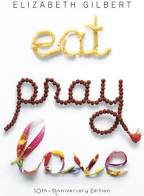
Elizabeth Gilbert, Eat, Pray, Love, (2006)

“In the end, maybe it’s wiser to surrender before the miraculous scope of human generosity and to just keep saying thank you, forever and sincerely, for as long as we have voices.”

Eat, Pray, Love is a unique balance between autobiography and other worldly story. Gilbert depicts her pursuit of greater self-love and understanding in a year long journey. As she travels to Italy, India and Indonesia the objective of her stay in each location is contingent on the most pervasive cultural ideal. The book is divided into three separate books with the first (Italy) focused on her discovery of pleasure, the second (India) on devotion and the third (Indonesia) on balance. While each section focuses on a different ideal the journey shows the gradual coalescence of these ideals. The focus on balance in Indonesia tying together the pleasure and devotion of the previous two sections. This book is as much about Gilberts own life journey as it is a love letter to travel and surrounding oneself in other cultures. The deeply spiritual nature of her experiences adds another layer to the messages and lessons of the book.


I came to Italy pinched and thing. I did not know yet what I deserved. I still maybe don’t fully know what I deserve. But I do know that I have collected myself of late – through the enjoyment of harmless pleasures – into somebody much more intact. (p.115)

As Gilbert reels from events in her life in the US her travel to Italy is the first step in her journey. A beautiful country full of wonderful foods and ancient cities her progress assimilating into particularly Roman culture is as entertaining as it is inspiring. Being early in the journey she depicts, this section covers a lot of darker moments coming to terms with where her life is at. Wonderfully presented is her learning of the Italian language and growth of friendships as well as cultural experiences such as the Rome derby between Lazio and Roma. She travels throughout Italy and this is her first major period of time outside of the US before. Gilbert presents this learning and adaptation in a relatable way that makes the reader cheer on her successes and lament in her suffering. The mouthwatering descriptions of gelato and stone-baked pizza makes you long for these local delicacies and is an introduction into a writing style that is so appreciative of everyday beauty. Even little things take on a new appearance when experienced in a different culture and country and this becomes a key theme throughout the book.

Learning to be present and enjoy an experience, slowing down and seeing everyday beauty are some of the lessons taken from the first section. Perhaps obviously Italy aligns with the “Eat” section of the books title. However, it is also about self-love and ultimately even with the sizable differences each location teaches slightly different forms of love and devotion.


India takes on the location for Gilbert’s closer spiritual love. In an Ashram she undertakes months in an almost ascetic lifestyle that encourages her to meditate, pray and show devotion to God. It is also significant that this is not a section preaching a connection to a specific religious image of God, but rather, everyone attaining a closer connection to their own vision of the divine.

“I believe that all the world’s religions share, at their core, a desire to find a transporting metaphor. When you want to attain communion with God, what you’re really trying to do is move away from the worldly into the eternal” (p.205)

Similar to her experience in Italy, Gilbert’s writing style lends itself to humor as well as struggle. Her interactions with Texan Richard are funny and intersperse periods of struggle with seeking her closer connection to the divine. The ascetic lifestyle is vividly depicted and is a fascinating insight into an experience that many will never undertake. While Italy allowed Gilbert to escape from the toils and painful past of her life in America, her time in India added a layer of complexity above the previous physical indulgence. In both sections she shows herself adapting to the new culture and becoming part of her local community. As suggested previously the reader will become enthralled in her progress and experiences. What is also a great addition throughout the book are pertinent stories for the experiences and culture of the places she stays that are equally entertaining, thoughtful and at times educational.


With Indonesia being the final section and focusing on “balance” it effectively wraps the two lessons from India and Italy and places pleasure alongside devotion. There is considerable attention to religious devotion but it simply takes a different flavor to that of her experiences in the Ashram.

“Happiness is the consequence of personal effort. You fight for it, strive for it, insist upon it, and sometimes even travel around the world looking for it. You have to participate relentlessly in the manifestations of your own blessings.” (p.260)

As the story dovetails into a contented ending and the conclusion of her own journey of self-discovery Gilbert still candidly shows her struggles. The writing builds upon previous experiences expertly, clearly showing how the teachings from her guru at the ashram form foundations for the new teachings in Indonesia. The ability to enjoy indulgence like in Italy clearly being built upon in enjoyment of the beauty of islands in Indonesia. Gilbert’s experiences in Indonesia, while showing a happier, more content person, transitions to a process of coming to terms with this more positive position. As journeys go this book contains a number of small paths that align to create a beautiful story of love in all its forms.

This is an inspiring book that also prompts reflection. It encourages travel as well as love for others. It shows the virtues of not judging others. It preaches the importance of self care. However, the most important message is one of achieving contentment. Making peace with her tumultuous past takes the whole book but Gilbert eventually achieves this through engaging in the various forms of love prioritized in each location. By the end she has started to heal previous scars, come to peace with past events and can simply be present in the most beautiful surroundings. If any reader is interested in travel of cultural experience this book truly offers a fascinating insight into assimilating and learning from other cultures.

Create your own website, free on WordPress.com.Create your own website.
Start free