Stop trying to be “Positive” all the Time…

Mark Manson, The Subtle Art of Not Giving a F*ck (2016)

At this peculiar and potentially worrying time in history, I, like many others found myself with a significantly different routine. The pandemic has created a breeding ground for negative thoughts, emotions and consistent worry about the barrage of news and updates on the development of the crisis. On the opening flap to this incredibly popular book Manson notes, “Let’s be honest; sometimes things are fucked up and we have to live with it.” At this time blending a sense of realism with efforts to maintain some positivity has become a challenge for many.
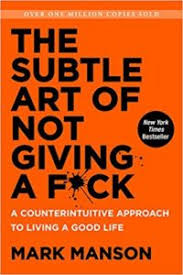
The subtitle, The Counter-intuitive Approach to Living a Good Life does sound great but the coarse language does little to make up for what largely becomes a repetitive message. However, I still find myself enjoying the refreshing writing style and even if the message is repetitive it still offers a lesson that is relevant in the current environment. I would summarize the main message as effectively suggesting only concerning yourself with the controllable elements of life.

Another insight offered is this process of reframing what is and what is not under your own control. The examples Manson offers are great stories in their own right often contrasting two in order to reach the lesson of that chapter. The example of Pete Best who missed out on being the drummer in the Beatles just before they achieved global fame, countered by Dave Mustaine who despite creating the metal band Megadeath was first kicked out of Metallica. The lesson Manson presents here concerns two individuals that both missed out on extraordinary global fame. While Mustaine did find considerable success with Megadeath he was never happy because he chose Metallica as the arbitrary comparison for success. Best on the other hand reoriented his values to family and continued to enjoy drumming around the world as well as a settled family.

Defining Good and Bad Values

Good values are 1) reality-based, 2) socially constructive and 3) immediate and controllable.

Bad values are 1) superstitious, 2) socially destructive, and 3) not immediate or controllable.

Honesty is a good value because it’s something you have complete control over, it reflects reality, and it benefits others (even if it’s sometimes unpleasant). Popularity, on the other hand, is a bad value.

Mark Manson, The Subtle Art of Not Giving a F*Ck

Manson continues through a number of different lessons with some that will undoubtedly being more relevant to some readers than others. I found that the separation of good and bad values underlies the other messages. This results in the previous suggestion that the book can become repetitive.

Another key takeaway that is actually fairly prevalent within similar inspiration/self-help/motivational books is that of becoming uncomfortable and going out of ones comfort zone. However, framed with Manson’s writing style and the more frank and upfront language it comes from a much less preachy perspective. Namely, it is best to be somewhat uncertain of yourself and that taking that first action is more important than starting motivated.


Certainty is the enemy of growth. Nothing is for certain until it has already happened – and even then, it’s still debatable. That’s why accepting the inevitable imperfections of our values is necessary for any growth to take place.
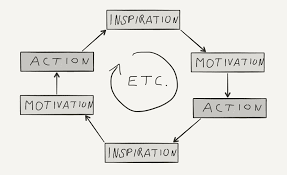
The thing about motivation is that it’s not only a three-part chain, but an endless loop:

Inspiration ->Motivation -> Action


The latter loop leads Manson to suggest the ‘do something‘ principle. If you lack motivation, he suggests taking action is the first step to generating a reaction that actually motivates you. This all then funnels back to the original message he promotes, that of not giving a fuck. Choosing to act, choosing not to act, choosing what to care about and choosing what not to care all require some element of not giving a fuck.

This impulse is shown to have two sides, one in which you do not care about others response if the action you wish to take is something you strongly believe in and you will not be stopped. The other, in not caring about things that are out of your control. The difference is somewhat subtle and this is why on the first read through the book was much more profound to me. Manson throughout all the lessons is therefore addressing a number of processes. It is also not teaching that not caring about anything is a positive. Instead, it is reorienting thoughts toward the controllable factors, it is steering away from a sense of exceptionalism and highlighting that everyone should be more selective about what they truly care about.

In my opinion, the success of the book is somewhat due to the move away from a constant narrative of positivity. It marks it as refreshing and while, it may, at points be jarring it ultimately still arrives at positive conclusions. Manson may spend time stating that not everyone is exceptional and not everyone will reach the same level of success, but what comes from this is actually the opposite suggestion with a caveat that everyone can be exceptional and succeed but it will be relative to themselves. To take it back to my favorite example. Mustaine considered himself a failure because his band Megadeath was not as successful as Metallica even though he still sold 10s of millions of records. Best on the other hand missed out on fame in the Beatles but considers himself successful having established a family and through finding peace in his situation can still enjoy playing music.

Not everyone is going to be successful and exceptional in the eyes of society but true satisfaction will come from inward contentment about not giving a fuck about that. As Best himself suggested “I’m happier than I would have been with the Beatles.”

This is all to say that despite the significant difference in form of Manson’s writing in comparison to other books of the genre this book still arrives at similar realizations. What he does achieve however, is a refreshing approach to arriving at said realizations. Furthermore, moving away from a sense of self-aggrandizing and exceptionalism helps his message stick. If any reader is ever interested in this type of book then this should be near the top of the list for the genre of motivation/inspiration/self-help. However, the book may not resonate with everyone. What is important is that when more people start to control what they can and stop giving a fuck about so many things then we may become happier, more content and generally better people. There are lessons that should be universally applicable and relatable and that is what gives this book its significance.

The desire for a more positive experience is itself a negative experience. And, paradoxically, the acceptance of one’s negative experience is itself a positive experience.

The current situation is difficult for so many but by abiding by guidelines and controlling the things one can control then some of the anxiety and fear can be diminished. The development of the epidemic is not something we can directly influence but by taking mitigation action we can help slow it down.

The Quest for a Fantastic Future

Ashlee Vance, Elon Musk. Tesla, SpaceX, and the Quest for a Fantastic Future (2015)

Building on from Originals last week, Ashlee Vance’s close look into the life and times of Elon Musk highlights one of the most significant originals in recent times. Not only is this the case looking back but in this extraordinary case, most definitely looking forward too. While the book offers a look at Musk’s life and traces this there are multiple narratives that run throughout. The titular companies Tesla and SpaceX are perhaps the iconic selections, however, they are just the tip of Musk’s business involvements. I did sometimes find myself wishing the book did not jump between the two pursuits so often but given the nature of Musk himself it is perhaps fitting and unsurprising.

The book begins by tracking Musk from South Africa, through Canada and on to the US. It also tracks his career and education. A precocious child, it is shown as evident that he would inevitably do something substantial in life. There is an in-depth look into his childhood and the foundation that allowed him to flourish after eventually making his way to North America. Further, it goes into detail how his entrepreneurial spirit was encouraged and fostered in his childhood. Throughout this early stage, the reader is guided along the path that led to Musk becoming the individual he became.

After education in Canada and work in the US, Musk originally helped creat Zip2 (a company that offered a form of integration that could now be seen as being between Yelp and Google Maps) before becoming involved with PayPal in the early 2000s. He became a millionaire off of Zip2 and through an insatiable appetite for work he continued to seek innovative projects. He also bucked trends by seeing success in the face of the burst dot-com bubble. Before he even started SpaceX and got involved with Tesla, Musk always had the greater objective of making an intelligible mark on human life. Such was his insatiable appetite for work that Vance vividly presents an image of a man that invested every ounce of his energy into every project. Vance compares him to the late Steve Jobs and Jobs’ involvement in Pixar and Apple by noting that while Jobs put less energy into Pixar than Apple, Musk plows equally as much time and effort into both Tesla and SpaceX and anything left over into his other company, SolarCity.

Elon is brilliant. He’s involved in just about everything. He understands everything. If he asks you a question, you learn very quickly not to go give him a gut reaction

Elon Musk. Tesla, SpaceX and the Quest for a Fantastic Future, p.238

As much as the book covers his various business successes and the process of pushing through failures, it also tracks the development of Musk as a personality. Not without his critics, the book pinpoints the examples of his grating management style as well as other negatives, both personal and business related. If interested in the businesses and technology that surrounds Elon Musk this book offers an in depth and relatively exclusive insight. However, this book also offers a fascinating insight into his personal life with all the ups and downs that characterized it. Reading this after Originals actually deepened my enjoyment of the book.

Vance also presents the ordeal to get the book written. Namely that Musk originally rejected his advances in creating this work. However, just as the book goes on to present, Vance persevered and in the face of the original denial, Musk respected Vance for not giving up. This doggedness to persevere further characterizes the personal and business story within the book. While the personal successes of Musk become more prominent toward the end of Vance’s work they mirror the eventual business success he sees. Musk also had considerable input on the book and appendixes and extensive footnotes epitomize his involvement, often clarifying or substantiating a point or event described. What is clear is that Musk loves technology and does not appreciate inefficiency. His prickly demeanor presented in the early stages of the book and his career often came in the face of others who could not see his thought process or get on board with his expansive ideas. Musk longs for humanities expansion beyond Earth and his involvement with the Mars Society and grand idea of settling the red planet present extravagant plans that some may not be able to get behind. However, what is clear is that his self-confidence and ability to achieve his objectives also manifest in the way he operates day-to-day. Musk has his objectives and will not let others sway him.

I had decided that this propensity for risk had little to do with Musk being insane, as he had wondered aloud several months earlier. No, Musk just seems to possess a level of conviction that is so insane and exceptional as to be off-putting to some.

Elon Musk. Tesla, SpaceX and the Quest for a Fantastic Future, p.359

Described as mercurial, Vance presents a holistic view of Elon Musk that substantiates such descriptions. Not only an interesting insight into his personal life and business career it also expands on some of the pointed coverage of Musk. Negative events and aspects are covered in as much detail as the positives and successes. What does emerge though is a compelling image of arguably one of the most important “Originals” of the modern world. If interested in the path of Tesla, SpaceX, SolarCity or any of the other business enterprises past or present then this book offers an intimate insight. If interested in Musk as an individual then the book also offers an equally compelling insight. The jumping between his various pursuits can be somewhat jarring at points but as the reader gets further through the book, as suggested, this becomes easier to understand and comprehend.

How to be a better Original

Adam Grant, Originals. How Non-Conformists move the World, (2017)

Being an original is seen as a hugely positive label. Not only are originals pioneering and seen to drive human progress but they are often associated with being hugely intellectual geniuses. Adam Grant is one such “Original” but as a leader in management thinking, motivation and teaching he largely shatters some of these preconceived notions of what it means to be “original”.

Being “Original” may be easy to define in principal but in practicality runs into a number of obstacles. The more that time passes the more ideas are generated thus the harder it becomes to truly be original. As such what becomes clear in Grant’s writing is that to be considered a leading “Original” there is much more than just innate qualities or a good idea that facilitates an individual or group being dubbed “Originals”. Some of the best “Original” ideas have come from building on, and improving on previous “Original” ideas.

The prevailing message of Originals is repetitive and Grant surrounds it with notable evidence and cases. What he succeeds in doing is problematizing what it means and what it takes to be “Original”.

The foreward Sheryl Sandberg (COO of Facebook and founder of LeanIn.org) pinpoints the core of this book.

Sheryl Sandberg

Conventional wisdom holds that some people are innately creative, while most have few original thoughts. Some people are born to be leaders, and the rest are followers. Some people can have real impact, but the majority can’t.

In Originals Adam shatters all of these assumptions.

As suggested, the general message of the book is one of what it means to be an “Original”. If anyone was to suggest which companies or individuals represent innovation and qualities of being “Original” similar answers would likely emerge. Names such as Steve Jobs, Bill Gates and Mark Zuckerberg or companies such as Google, Apple and Microsoft would dominate in the current technological age. What Grant does so well is give cases behind those individuals and companies that highlight where they are indeed “Original” and where they are not. In doing so he also provides studies and cases that highlight other “Originals” who made a significant impact or for some reason or another did not leave as substantial mark as they may otherwise have done. While the chapter structure does clearly signpost which aspects of being “Original” he was next going to unpack, the message does become evident early and sometimes seems to drag.

Namely, being seen as “Original” by others often comes with substantial luck, correct timing, and a period of push-back. It is in the push-back that “Originals” either persevere, overcome or succumb. In the first of these three responses, “Originals” can persevere and over a period of time may sway enough people through effective communication to invest in this new idea. In the second, “Originals” may overcome the obstacles to creating a new idea and have enough sway or authority already to produce their desired outcome. The third is the situation in which many people find themselves. As the full title of the work suggests, How Non-Conformists change the World, these ideas often do not conform with the status-quo. As such they may be perceived as a threat or challenge from those higher up, if the “Original” individual can not persevere or overcome then such ideas are quashed and individuals succumb to the conventional.

These three responses are more complicated in practicality and may overlap in addition to some ideas simply not being successful. Grant provides a number of examples of ideas that were “Original” but did not succeed in the way expected, a fascinating case for me being the segway. What becomes clear in these relatively unsuccessful cases is that there are some serial “Originals” that come up with a large number of original ideas or inventions, in doing so the chance they create a hugely successful “Original” idea also grows. What Grant makes clear is that under different circumstances everyone can be “Original” but it takes certain personas and qualities to make these ideas successful and even then this can rely on timing and other social factors.

This is a book that hinges heavily on behavioral psychology and offers a number of fascinating cases. It does have a message that becomes evident early which meant I sometimes lost interest in some areas of the book but it robustly shows how conventional wisdom on “Originals” can be somewhat misplaced. Most notably that everyone has the potential to create original ideas but is the personal situation and how susceptible to social influence an individual is that can define this potential.

A more revealing aspect of this book that aligns with messages from Malcolm Gladwell’s Tipping Point is the importance of effective communication. It is presented how we are all susceptible to effective communication. Messages presented in one fashion can have a significantly different impact when presented in another fashion. Ultimately, what Grant does successfully show is that while everyone is capable of being an “Original” there are still some select people that are more likely to be successful at it. This leads to a personal conclusion that while originality is celebrated, it is actually the perseverance in the face of, and overcoming of certain obstacles of tradition that sets these individuals apart. In addition, there are many more individuals being “Originals” than are commonly celebrated and in every sphere of life there are those innovating and attempting to realize these original ideas. Communication and the status-quo can stifle originality but it is also true that an original idea may not be a ‘good’ idea. Therefore if an “Original” idea is truly ‘good’ then it requires the non-conformist to be a particular type of person for this idea to become part of human progress.

I would definitely recommend this book if a reader was interested in similar work but also caution that personal conclusions can be drawn from the work on specific elements that may be more relevant.

The Dirtiest Race in History

Richard Moore, The Dirtiest Race in History (2013)

Doping in sport has become a consistent presence in news over recent years. Most recently, the case of Ruth Jebet was just another example of depressing stories of leading athletes testing positive. The Dirtiest Race in History follows one of the most notorious cases but it is certainly possible that more recent examples could challenge for such a title. What emerges from Moore’s work is the systematic issues that facilitate this situation. This post will be focused on the book but also on the situation regarding track and field rather than systemic issues in other major sports.

This book tells the story surrounding the 100m final at the 1988 Seoul Olympics. Presented almost like a dramatic Hollywood movie there is a fixation on the relationship between Carl Lewis and Ben Johnson. As Moore states describing the pair leading into the Olympics.

It’s the contrast between the pair that makes the race so intriguing and their rivalry so beguiling. That and their mutual dislike. Johnson is rough; Lewis is smooth. Johnson exudes menace: he is a boxer, or a bull. Lewis is a butterfly: sleek, graceful, soft-featured.

A link to the race can be found here

Carl Lewis was looking to defend his title at the 1988 Olympics, Ben Johnson seeking to prove his position as the fastest man in history. What eventually unfolded after the race is now widely known, what Des Lynam at the time called “the most dramatic story out of these Olympics, or perhaps any others.”

The focus is squarely placed on Ben Johnson but only two of the Seoul finalists have never been tainted by drug allegations (Robson da Silva and Calvin Smith, 6th and 4th respective in Seoul). The story parallels Johnson’s and Lewis’s careers and progress to the Olympic final. Moore highlights the development of their respective personas but through personal interviews shows where these were in alignment with reality or media creations. Even without performance enhancers these two men were exceptional athletes. What seemingly holds true in this case is the common phrase that it is the search for the extra 1% that drove athletes to using such drugs and treatments. It is a compelling narrative to see the traditional kind of movie plot emerge from two athletes who were celebrities by the time of their showdown in Seoul.

Aside from the narrative of Johnson and Lewis the well researched book also covers the nature of track and field in the 1980s. This is also a fascinating insight into the state of agents and athletes at this point in time. The sections on college recruiting and agent management of both Johnson and Lewis add to an already intriguing story. In addition to all this Moore describes the personality of both and how this influenced their career development. What Moore does well in this case however, is assembling the cast for the 1988 final, particularly Calvin Smith, the highest finisher not tainted by drug accusations and the athlete who claims he still feels he is the moral winner of the race. The book while focused on the two stars pulls together historical figures, those close to both athletes and those who were also involved in the titular event. Containing interviews with many of those involved strengthens the narrative of this book.

Since the 1988 Olympic final showdown, countless examples of drug cheats being exposed have come to light. Consideration of the banning of Russian athletes comes with closer scrutiny of systemic issues not only within track and field but countless other sports. Also noting some of the most significant cases such as Lance Armstrong and the investigations into Alberto Salazar and the Oregon Project. The Dirtiest Race in History may no longer be the most accurate title but many of the issues it presents are still very much prevalent. For example 6 of the top 9 athletes in the women’s 1500m final at the 2012 London Olympics were all indicted in such PED accusations. What this creates is a lack of trust in exceptional performance and severely damages the livelihood of those athletes that missed out on medals or prize money.

The 2012 Women’s 1500m Final

Ultimately while an incredible event itself, the 1988 men’s 100m final marked a low point for athletics and has since been shown as a forecast for such problems being systemic. With so many negative stories surrounding doping in athletics the title may not be as accurate but it will always hold a place in history. Separating the book itself from the wider problems it deals with leaves a compelling and interesting story, however, as an athlete and someone interested in track this book is hard to read without judgement. It follows on from some of the themes in Running with the Kenyans showing systemic problems in regulations which create an uneven playing field but also damage trust in exceptional performance.

“This was me now”

Stephenie Meyer, The Host (2010)

The Silver Ring of the eye indicated a Soul inhabited the human body

For the first time in a while I found myself spending a couple of hours unable to put a book down. The Host not only takes place in a compelling and thought-provoking environment but involves a number of fascinating relationships as a result. With Earth becoming home to a race referred to as souls this could be seen as a sci-fi story of alien invasion. However, the souls require a host in order to survive and this story follows the path of Melanie Stryder and the soul that inhabits her. It swiftly becomes more of a story about the relationship between the human and soul that occupies her mind. In fact, the most compelling elements of The Host to me were to be found in these relationship elements. Imagine for a second having a love triangle but with two bodies. This is the conundrum that Meyer presents so beautifully throughout the book.

Even before external romance enters the plot, The Host shows the gradual process of budding friendship and love between Melanie and the new soul that inhabits her. The Earth has become a place in which the Souls have taken the majority of human society as hosts with pockets of human rebellion. Without ruining the plot of the story it is compelling as a result of the legitimate justification that both sides can have for their actions.

When the evening news was nothing but inspiring human-interest stories, when pedophiles and junkies were lining up at the hospitals to turn themselves in, when everything morphed into Mayberry, that’s when you tipped your hand.

Meyer, THE host

The Souls move from planet to planet creating harmony and peace. Generally it is suggested they effectively erase the human identity they inhabit, however, with Mel her human side is too strong to suppress. On one side we have an alien entity that homogenizes society but brings this peace at a perceived cost of erasing the native people. On the other we have humans who despite the flaws and susceptibility to violence are capable of overwhelming love and forgiveness. It is through love that the narrative of The Host is wound. The story follows the learning process of both sides within the same body. Mel and Wanderer (the soul that inhabits her) both grow gradually closer as they begin to see the situation from the others perspective. It is also the love for others that empowers Mel to not succumb to Wanderers occupation of her mind.

By nature souls are described as ‘all things good: compassionate, patient, honest, virtuous, and full of love.’ In this first description irritation and anxiety are subsequently blamed on the Soul in question occupying a human body. The strength of emotions in humans are noted as a problem in The Host but there are numerous examples of even the Souls struggling with their actions. One of the jobs in the new society was “Seeker” and there is hostility toward them from both the humans and other Souls. Perhaps because they often exhibit qualities that place them between the human nature and that of the Souls.

Who would be attracted to the chore of tracking down unwilling hosts and capturing them? Who would have the stomach to face the violence of this particular species, the hostile humans who killed so easily, so thoughtlessly? Here, on this planet, the Seekers had become practically a…militia – my new brain supplied the term for the unfamiliar concept. Most believed that only the least civilized souls, the least evolved, the lesser among us, would be drawn to the path of Seeker.

Meyer, The Host

The internal conversations between Mel and Wanderer act as the thought provoking elements to the story unfolding around them. Human impulse against the peaceful and “good” nature of the Soul. It is in this clash that the relationship elements of the story also become so much more compelling. Furthermore, it becomes harder to separate the two as the story develops and it is when the qualities of the Souls are found in humans and vice versa that the most significant developments take place, especially when this is internalized by Mel’s mind.

Look, I’m human. It’s hard to be fair sometimes. We don’t always feel the right thing, do the right thing. The resentment was still there, but she was trying to forgive and forget that I’d just made out with her true love – that’s the way she thought of it, at least.

Meyer, The Host

It takes effective writing to make these passages easy to understand and Meyer does it throughout the book. It is a long book but it draws you in and I found it easy to get through large sections at a time. It does require attention though simply due to the situation I presented in the first paragraph of a love triangle with two bodies. The story of Mel and Wanderer has such a pull on it and the ending is both emotional and uplifting. I would wholeheartedly recommend this book to anyone looking for a longer read and I am now looking forward to watching the film adaptation.

Never Give Up Never Give In

Louis Zamperini, and David Rensin, Don’t Give Up, Don’t Give In (2014)

Not many athletes stories start with smoking cigarettes at 6 but Zamperini’s story is far from traditional. In fact, the subtitle of this particular work on his life is “Life Lessons from an Extraordinary Man”, any reader would agree with this sentiment as they follow the twists and turns of his amazing life. Add that Angelina Jolie created a film adaptation called Unbroken and the true extraordinary nature of Louis Zamperini’s life is brought into a dramatic light. Stories of an individuals life would only be adopted to the screen with a compelling narrative and regardless of the reviews of Unbroken it certainly fits this mold. Sadly Zamperini passed away in 2014, the same year as Unbroken was released but he did manage to see most of the production and his positive experience with Jolie is noted in this book.

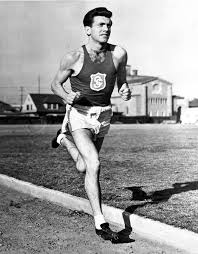
This story starts from his childhood and growing up in an Italian immigrant family in America. Not an easy childhood, the mischief that Louis got up to occupies the early chapters as he escapes punishment often but is eventually caught up. It is in this process of getting caught that his family and particularly his brother push him towards running. Putting his energy into running pushed him onto the Olympic path, prior to his competing at the 1936 Berlin Olympics his brother coached him and as he improved through school he earned his place at USC. During his collegiate career he ran an NCAA record (4m08s for the mile) on top of the high school state records that earned him his place and he was the youngest American 5000m qualifier for the Olympics. At the Olympics he received a personal invitation to meet Adolf Hitler due to his fast finish. While his running career in itself is fascinating to learn about, it is only really the start of Zamperini’s story.

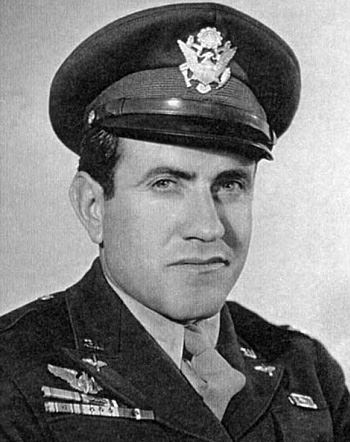
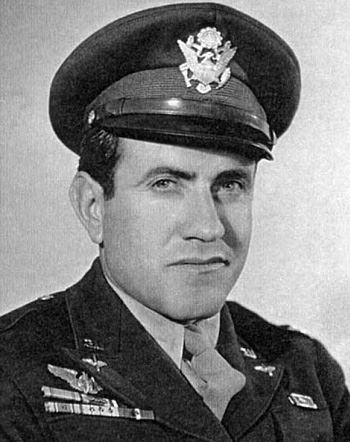
A couple of years after graduation he enlisted in the army air force for World War II. It is this period of his life which becomes the prominent focus of Unbroken especially his traumatic experiences as a prisoner of war in Japanese camps. The description in the book of his drifting at sea feeds the message of not giving up, it is equally a prominent part of his story given his later experiences on return to the US but is not as addressed in the film adaptation. After 47 days adrift Zamperini and Russell Phillips were captured by the Japanese.

The vivid descriptions of the brutality in these camps as well as the position his fame earned him is somewhat mirrored in the adaptation. The endurance of these conditions is very raw in both formats though and his fame brought him special torment from guards. His situation and past did also earn him some privileges during his time in captivity when apart from the particular guards that singled him out. He had previously been announced as killed in action and his heroic welcome back to the US in 1945 catapulted him into celebrity status.

His personal life after his return occupies the rest of the book. This includes his becoming a born-again Christian and other escapades. However, the most jarring is his description of the PTSD and struggle with depression. As he states best himself:

I survived the war, but then I had to survive myself coming home from the war.

Don’t Give Up, Don’t Give In, p.129

Louis Zamperini had those around him to help him but his story is far from unique and the vivid description of his struggles are very emotive. The process of overcoming all these obstacles shows why the book was titled the way it was. However, aside from the fascinating narrative it also highlights common issues for veterans as well as the brutality of war. Personally I found the experiences of his running career and time in the army the easiest to read as an interesting narrative with the later parts of the book dragging more. However, his life was undoubtedly extraordinary and inspiring and these elements are clearly evident in both the book and its adaptation.

Zamperini following his return and period of healing started speaking regularly and became an evangelist. All the experiences he had, he used to make a difference in the lives of those who had suffered similarly.

I preferred last weeks book to this one but given the extensive variety of experiences in Zamperini’s life the book will offer something different to every reader. Furthermore, to me it is another case of the book being greater than its adaptation. The life lessons though are valid and his story raises a number of important considerations. Namely supporting veterans when they return but also as the title says “Don’t Give Up, Don’t Give In”. Among other things Zamperini taught a lot of people and his life brightened many of those around him. His story shows that if you persist and endure there will be a brighter future and you can overcome obstacles while also teaching to be forgiving and kind to those around you.

For his obituary click here.

Running with the Kenyans

Adharanand Finn, Running with the Kenyans (2012)

A staple of any runners library, the story told in Running with the Kenyans is perhaps pretty obvious. However, as a process of discovery there are a number of twists and turns. As the extended title suggests the mission is ‘Discovering the secrets of the fastest people on earth.’ Any casual observer of the World Athletics Championships or Olympics would probably be able to pick out the dominance of the neighboring nations of Kenya and Ethiopia in endurance events. The nations presence in and around the podium places at major championships has become common. This development is noted in the book as becoming part of a boring pattern in long distance running.

Similarly, Finn notes that while he lived in Kenya he was always aware of the presence of international athletes who travel there to improve. It is through this story that he aims to uncover what really goes into the Kenyans (among other East African nations) dominating endurance running. He takes the reader through an initial process of the commonly ascribed qualities, namely barefoot running and the mechanics it promotes. However, once he moves to Kenya this comes under scrutiny. It is this process itself which is present throughout the work. Notably that common scientific understandings of why and how Kenyans came to dominate the sport come under closer scrutiny once observed in close quarters.

Interestingly the book does not simply purport positive qualities and values. The authors experience at a local race where athletes pick their age based on whether they feel ready for the senior race is an iconic example. These structural problems have been increasingly exposed in recent years with doping scandals and while the book does not expressly address these, the environment, is presented as being susceptible to such exploitation. These external factors should also be considered in judging these successes. There may be many intrinsic and environment driven factors in the success of Kenyans in running but it would not be complete without the consideration of the impact of drugs and system exploitation.

Aside from the consideration of Kenyan success and its constituent factors, the book follows the authors journey to run the Lewa marathon in Kenya. Noted as one of the hardest marathons in the world it is a good story of self-discovery and improvement. However, with the specifics of Kenyan running, the book will likely be of more interest to those invested in sport and even more so long-distance running. However, to those outside the sport it does offer a lot of learning opportunities as well as a fun narrative of the authors journey.

The book is easy to read and as suggested at the start, is often a staple of a runners library. It has also won or been shortlisted for a number of awards. What it does well is intertwining the number of aspects it aims to address. It may not interest all readers but the number of elements to the story do expand it beyond just a book for runners.

Perhaps the nature of the book is most succinctly understood from the review in Publishers Weekly.

Part scientific study, travel memoir, and tale of self-discovery, Finn’s journey makes for a smart and entertaining read.

Publishers Weekly

Next weeks book will also involve an element of endurance running but has a much more dramatic and expansive narrative. It led to the creation of the film Unbroken in 2014 and is the unbelievable story of Olympian Louis Zamperini.

An American Abroad in a Post-American World

Suzy Hansen, Notes on a Foreign Country. An American Abroad in a Post-American World (2017)

Hansen’s work is a mix of self-realization, historical education and anger at a personally misplaced sense of American exceptionalism. Told from her experiences of moving to Istanbul from New York under the cloud of scaremongering headlines about the “Muslim World”. Hansen herself throughout Notes on a Foreign Country describes the process of learning, or more importantly, unlearning the lessons she has been taught and becoming part of the beautiful and vibrant Turkish culture. (If you have longer, there is a video of her talking about this book at the end!)

The new environment Hansen found herself in, offers an opportunity to engage the traditional West vs. East dichotomy. This is even more true in her own mind, Hansen explores these traditional perspectives and there are a number of telling quotations about the nature of this seeming opposition. The book is really an encouragement to travel and see more of the world, the experience of living within a different culture shifting prior perspectives.

“To look at the world from a new perspective is to feel as if the ropes holding you to the earth have been cut.”

The most common conclusion of Hansen is that her American background limited her true exposure to these other histories and stories. The way she writes does seem anti-American at times but is ultimately more targeted at systemic and structures than a particular country. This is a reference to the history lessons that I suggested this book offers. The counter narratives that may not be taught as regularly in the US are the stories that Hansen gets to learn from her Turkish hosts. Notes on a Foreign Country offers great snapshots of the main issues that Hansen comes to observe. She discusses her interaction with other writers, historians and politicians and this leads to the most significant learning. Her interaction with Pakistani writer Kamila Shamsie is revealing of these different perspectives.

“Please explain,” Shamsie asks, “why you [US] are in our stories but we are not in yours.”

Notes on a Foreign Country, p.203

Shamsie’s suggestion is indicative of these selective narratives in history, how forms of imperialism have been quietened, her case specifically referring to the extensive involvement of the US in Pakistan’s development. Similarly the effects of US involvement in Turkey are still felt and understood by the locals Hansen meets. It may be harder to find a comparative understanding within the US itself. This is not a book with a plot per se but demonstrates Hansen overcoming her prior prejudices and perspectives when it came to her expectations. It is within this process of discovery that the history lessons emerge, how similar seemingly disparate nations actually are.

Notes on a Foreign Country places great emphasis on overcoming a sense of cultural superiority. Hansen describes this as acknowledging the cultural differences between nations but that these differences are largely just manifestations of the same impulses. The most important lesson and one that everyone that has the pleasure to travel should ascribe to is presented early in the book.

Istanbul, Turkey

“If I was going to live in Turkey, I had to learn to think like a Turk. These were not my rules to break.”

Notes on a Foreign Country, p.73

Substitute Turkey for any other destination and the message is one of assimilation. Living in or visiting another country should not be another opportunity to claim cultural superiority. Once the background of a countries development is understood some of those ‘rules’ will make more sense. Ignoring the reasons for particular aspects of a nations society and culture clouds will not only create anger at situations but also obstacles for truly enjoying being in another country. Assimilation rather than imposition opens up doors to much greater learning and relationships with local people. Understanding that you may not know why something is the way it is and listening without prejudgment could open up extensive opportunities for important discussion.

Reading Notes on a Foreign Country as an American may create a defensive reaction. However, this is a reflection on the involvement of America within countless other countries development. As Shamsie suggests, there is a much greater prevalence of America in other countries stories than there is of said countries within American history. Hansen’s suggestion is one that this situation is reflected within attitudes and perspectives of American citizens. I would suggest that this is not just an American issue but rather a problem of the West and East dichotomy.

There are a number of reasons to read Notes on a Foreign Country particularly if you enjoy 20th and 21st century Turkish history. To me the more important messages can promote self-reflection on personal attitudes and perspectives when it comes to observing other countries. This is especially significant when it comes to travelling. If travelling from a traditional Westernized nation, the lesson is one of respecting the traditions and rules of the destination country. This comes across as blunt and jarring in the book sometimes but leads to Hansen reaching a much greater appreciation of her life in Turkey. Generally though it highlights how there is a lot more in common than most give credit even between countries such as the US and Turkey.

Hansen in the video linked below describes and explores these lessons.

As far as this blog goes, the next three books have been posted on the “Book List” page. Take a look and as always questions and comments are welcome.

Cheers

“Phonies”

J.D. Salinger, The Catcher in the Rye (1951)

A classic of American Literature, Catcher in the Rye contains a number of significant social themes. As a commonly assigned book in English classes it was an opportunity for me to see what I had missed. This will be a shorter personal review compared to previous posts. Ultimately, while I can totally understand the variety of themes that run through the book and why they resonate with so many people, I, personally did not particularly enjoy reading the book.

Holden Caulfield offers a fascinating protagonist, angry at the system around him and pressured by expectations. The story may have its ups and downs and could have taken place over a longer period of time than it did. The happier ending also comes as a welcome conclusion to an otherwise semi-depressing story.

The many events in Holden’s story may be relatable on their own but compared to previous fiction books I felt it was a collection of events rather than something that built on top of each other. That is not to say that I did not enjoy specific events within the book but a more plot driven narrative appeals to me more. My reflection is therefore one of personal dissatisfaction rather than an outright critical opinion on the book.

This is perhaps ironic given the perspective of Holden himself within the story given his general malaise. Catcher in the Rye to me would not occupy a top spot on my favorite books list but I can slightly understand why it would on other peoples. My main conclusion would therefore be that the themes that run through the story are therefore more likely to appeal to different readers for individual reasons. The anger toward the system and sense of rebelliousness are identifiable and the consistent use of “phonies” is relatable in the current social media age. The idea of superficiality from his perspective is contained within the angst that is also commonly exhibited. However, as repeatedly stated I did not particularly enjoy reading the book as a whole and would suggest that in a specific mood or period of life the story it is more likely to appeal than in others.

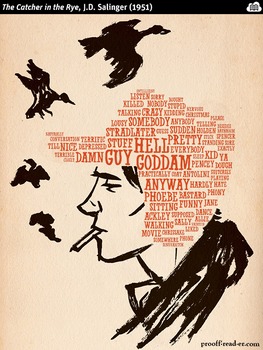
Another brilliant art piece based off the book

The Catcher in the Rye was an important book for me to read given its cultural importance. However, I did not enjoy it as much as I would have liked even though Holden’s perspective on “phonies” and societal standards was something I found equally entertaining and thought provoking. Life can be messy and this book encompasses that, it is also not a particularly long book which made it a little easier for me to get through.

The Fundamental Interconnectedness of all Things

Douglas Adams, Dirk Gently’s Holistic Detective Agency, Pocket Books (1988)

Identifying an author from a particular style of writing is perhaps never easier than in the case of Douglas Adams. I have previously read Hitchhiker’s Guide to the Galaxy and Dirk Gently’s Holistic Detective Agency very much fits within this same niche. An eclectic mix of quantum theory, fantasy, crime and the absurd this book may not be the easiest casual read. Multiple read throughs would probably result in new details being clearer even though the story is more easily followed through teleological means. This does not diminish the story though as it is interesting to consider the variety of story lines both independently and how they all tie together.

Promotional Image for the TV adaptation of Dirk Gently’s Holistic Detective Agency

Dirk Gently’s Holistic Detective Agency is a fascinating story to consider in its wider reaching influences. Not only does it have a TV adaptation but it also has implications within the Doctor Who universe. The descriptions of both the book and its adaptations get closer to entanglement of genres that characterize the story. The TV adaptation considered a ‘comedic-thriller’ or a ‘comic science fiction detective series’ and perhaps more characteristically described by the author as a ‘thumping good detective-ghost-horror-who dunnit-time-travel-romantic-musical- comedy-epic.’ The infusion of song numbers within the story provide an amusing break to the prose of the story while also attempting to expand the particular event of the moment.The book is continued in The Long Dark Tea-Time of the Soul . I will inevitably pick up the sequel later on to follow the eponymous Dirk Gently as his seemingly haphazard methods continue to solve cases that are contingent for the survival of the universe.

Jumping from story line to story line between chapters the story can become confusing to follow at times but all gets tied together in the end. Invocation of quantum theory creates the belief of the titular character that he believes in,

The fundamental interconnectedness of all things

Notably this also raises a discussion of Schrodinger’s Cat and the discussion of its theoretical implications. Also noted in this story are the wild characters and their mannerisms. Or in the case of the ‘Electric Monk on a bored horse’ their purpose. So many different aspects of the book are a journey into absurdist thought and quotations and snippets from the story could provoke discussion on their own.

Consider the discussion of the Electric Monk:

The Electric Monk was a labor-saving device, like a dishwasher or a video recorder. Dishwashers washed tedious dishes for you, thus saving you the bother of washing them yourself, …Electric Monks believed things for you, thus saving you what was becoming an increasingly onerous task, that of believing all the things the world expected you to believe.

In this world constructed by Adam’s, the Monk could be upgraded to believe more or believe more intently and the consideration of technological upgrades in this society is a humorous and necessary element of the Monk story line.

Another entertaining aspect of the story is that of the ghost. Writing about the frustrations of living as a ghost Adam’s also provides a narrative of existential questions. If one became a ghost how do you spend your time? Can you make yourself visible to others? Can you interact with physical objects.

Aside from these entertaining segments and sections of narrative about characters just consider the absurdity of the perfectly stuck couch or a horse in a relatively small bathroom. So many elements of the book are entertaining and humorous it is worthwhile reading just for particular aspects.

Nevertheless it is the final lines that should interest potential readers; “‘saving human race from total extinction – no charge.’ He put on his hat and left for the day.” All the humorous sections may not seem to correlate with the wider reaching threat but as suggested by the title, there is a fundamental interconnectedness in all things. Dirk Gently’s Holistic Detective Agency covers such ground that it really could be whatever type of book you wish depending on the theme that you want to follow more closely.

Cheers, this book marks one full month down and 5 books covered. The Catcher in the Rye will certainly be a less whimsical and absurdist book next week but I look forward to reading it.

Create your own website, free on WordPress.com.Create your own website.
Start free