Harry Potter and the Cursed Child

J.K. Rowling, John Tiffany & Jack Thorne, Harry Potter and the Cursed Child, Arthur Levine Books (2017)

It has been a while and ultimately I had not been motivated to write about this “book”, while an addition to the Harry Potter Wizarding World it is not a hugely satisfying addition. That said, it does expand on the original stories and seeing the iconic trio as parents is compelling at least from the basic level. Nevertheless porting an award winning play to book form highlights the lack of descriptive and comprehensive world building that was so compelling about the original series. This “book” will be enjoyable to fans of the series but leaves a lot of space for questions. In addition, if this had been properly transformed from the stage into a descriptive and vivid story I would have found it a far more valuable extension of the originals.

While the play/book is titled Harry Potter and the Cursed Child this is much more of a story about Harry’s son Albus Severus. In similar fashion to the original trio, the duo that eventually forms between Albus Severus and Draco Malfoy’s son, Scorpius Malfoy provide the main thrust of adventure. Despite the 19 years of time that has passed since the events of Harry Potter and the Deathly Hallows there is still animosity between the duo’s fathers. While Albus and Scorpius throw themselves into Hogwarts life and adventure which is the main storyline I found myself generally finding Harry annoying. Seeing the original trio relatively undeveloped character wise from the original stories. Ron is still funny and bumbling in his way with Hermione still as book smart as ever. Hermione and Harry both work in the Ministry of Magic although it appears their reputations established them in these positions. Ron manages the Weasley magic joke shop. It is fun to engage in the Wizarding World 19 years later but given the main storyline there is not a ton of details around how things have changed in that period.

Of course, Voldemort is not forgotten but is not thought of as a existential threat any longer. However, his shadow tinges all aspects of this story and catalyzes events as the story reaches its climax. As I said earlier I found Harry annoying in this story and his parenting methods can largely be held responsible for the events that take place. It is his dismissal and callousness toward Albus Severus that drives his son to act.

The storyline centers around time travel which is compelling for a Wizarding World in which it was smaller concept during the original stories (Hermione’s experience with the time turner is referenced regularly). Time turners in this story have been banned and destroyed, that is all except one (which turns out to be two). In his anger towards his father Albus, roping in Scorpius, take action that ultimately changes the timeline of elements of the original stories. The most compelling element of this play come book was the counter-factual situations that emerge through the boys actions during time travel. As I said, this is not as grand and vivid adventure as the original stories but the driving concepts could certainly have been explored further in an additional book.

In the end though, J.K. Rowling herself said, ‘it is clear that once audiences see the play they will agree that it was the only proper medium for this story.’ Without providing spoilers it is clear how releasing a book that is simply the script of the play is limited in the imagery and description that would make this feel like a full novel addition to the series. My recommendation would be to watch the play, while elements are compelling and rewarding for big Harry Potter fans it does not quench a thirst for additional novels.

What is clear though is that this story clearly translated well to the stage and if details were fleshed out it could have also translated to novel format. There are exciting, amusing and frustrating stages of this story but I was not drawn into it in nearly the same way as the original Harry Potter series. In addition, due to the pacing of a play elements that were worth more consideration feel rushed, this may not have been the case in a novel form.

I do not want to spoil the story for either those that end up watching the play or those that read the associated book. While I did not feel fulfilled by it and Harry comes across as an unlikeable character for the most part there are sections that are interesting and may be more compelling for big fans of the Wizarding World.

Reflections on 2020

At the start of 2020 I made a resolution to attempt to read a book every week. I will not say I succeeded but through adapting and making this blog as a form of accountability I achieved my greater goal of reading more. I had to adapt ‘book’ to mean story and either the posts or the readings were sometimes very rushed. However, every Sunday at 10:30 I managed to post about the story/book that I had read that week. It was very challenging at times balancing this with work, school and generally chaotic life that happened in 2020. With that said there were some key takeaways that I will share here.

  1. Creating an accountability method was hugely important in keeping my focus and attention on reading.
  2. Creating a blog to track my reading gives me a way of looking back at what I have read and take pride in my progress.
  3. The resolution gave me practice at effective reading and writing.

I believe many people make resolutions that they otherwise do not keep, reading is a simple one to engage in. Further, my commitment to the process led to others offering me books they enjoyed or discussions about their own favorite books. Even beyond interacting with others my own learning was advanced by reading more, I found books that I referenced in classes and assignments and expanded my vocabulary.

That said there were some notable drawbacks to my resolution and method of accountability.

  1. Even without high readership of the blog I felt I had to put out a writeup.
  2. The writeup was often rushed and had errors but the process of even doing the smallest writeup also caused me to be distracted from other tasks.
  3. Most importantly, I was rushed in the readings and while I did properly read many of the books there were many that I did not focus on or enjoy as much as I could have.

I am happy enough to claim that I achieved my greater goal with the resolution and also continue to use the blog as a way of tracking what I read but I am no longer sticking to a routine or time deadline.

My general understanding of New Years Resolutions is that many create them and already give them up by the end of January. With the blog I was able to almost force myself into sticking with mine. Resolutions tend to lack a sense of accountability and whether physical, mental or emotional resolutions, an ability to hold yourself accountable whether to others or yourself I believe to be essential. Many also establish unrealistic expectations, progress takes time and occurs one step at a time. There were times when I did not think I would be able to stick with my resolution, at least in the sense of posting weekly. However, through adapting and sometimes selecting short stories I was able to still achieve the main goal of reading more and the arbitrary accountability of posting weekly.

This blog was never setup to receive attention or promote anything, although if someone was encouraged to read more, or a specific book then that is great. As repeated this blog was an accountability method and I will continue to use it as such. I am proud though of what it became, over the year I wrote over 42,000 words, the posts received over 125 likes and importantly I read 52 works of literature through a year. This was irrespective of life events, school work and reading or the length of the books themselves.

The next post will be about Harry Potter and the Cursed Child (Part 1 and Part 2) but I will take my time and enjoy both the reading and writing process. Here is to a better 2021!

A Christmas Carol

Charles Dickens, A Christmas Carol, 1843

Given the festive time it felt right to finish off a year of writing a little report/review every week on one of Charles Dickens’ most well known stories. A Christmas Carol is widely known and has a variety of adaptations, the story itself is riddled with meaning and offers many life lessons. Interestingly it came up as a chapter in We Come To Life Through Those We Serve as the final phase (Stave Five) of A Christmas Carol shows Ebenezer Scrooge serving others.

The depiction of the Ghost of Christmas Past, Ghost of Christmas Present and the Ghost of Christmas Yet to Come is an iconic aspect of this story and ultimately informs the change in Scrooge that facilitates his service to others. The dickensian situation of the story is highlighted through the plight of the Cratchit family and the common understanding of a miser will immediately create images of Scrooge. His rejection of an invite from his nephew and his lack of empathy for others are the foundation on which his transformation take place. In addition this transformation is seen as part of the Christmas spirit and certainly the idea of gifts and spending time with loved ones is now synonymous with the festive period.

The story itself is so well known that there need not even be a summary of it but the ability to analyze it and the ways to do so are very large. Seeing the story analyzed as a chapter in a book already read highlighted how different readers can take different lessons from the same story. The ghosts offer an opportunity for Scrooge to observe his own life from a different perspective and the opportunity itself is incredibly transformational. No one ever truly gets to know what others think of them or at least how they are perceived. The culmination of seeing where his current path leads as well as seeing the love of the Cratchit family highlights to Scrooge the superficiality of his life as he embraces the spirit of generosity.

The darkness of the story transforms in the final stave as Scrooge goes about addressing the actions he took only the previous day. The lessons though are clear and the unequivocal suggestion that living in a spirit of generosity is evident through Scrooge’s transformation. The lesson is also clear in the situation of Bob Cratchit who despite being incredibly poor and working for Scrooge still lives generously and provides for his family. The Ghost of Christmas Present is particularly important in this situation as it introduces Tiny Tim and highlights how no change will lead to his death. The ability of generosity in this situation to change the direction of lives around you is epitomized by the case of Tiny Tim. The change in Scrooge not only vastly changes his own life but dramatically improves the lives of those he deals with.

No one will truly have the same experience but the idea that in some situations your life could flash before your eyes is one that has been credited as transforming the lifestyle of people. A Christmas Carol shows the importance of priorities in life and lands on emphasizing the value of family, love and generosity. Within this is the importance of empathy as Scrooge sees the Cratchit family and begins to understand Bobs situation. This is an iconic Dickensian novel and the story is known worldwide for a reason. The lessons are simple but meaningful and should make any reader question what in their own life is superficial. The transformation of Scrooge and his eponymous association with the term ‘miser’ are held as common arguments for the superficiality of wealth. The Cratchits are represented as far wealthier due to the loving family environment and generosity to those around them. This was a timely reminder of what is truly important and also a timely story for the last post of the year.

The Glass Castle

Jeannette Walls, The Glass Castle, Scribner, (2005)

This is a great memoir that has its inevitable depressing moments as well as corresponding inspiration and uplift. I found it wonderfully paced and the number of sections throughout the story meant I was consistently drawn back to find out what happened next. As much as it is a memoir of Jeannette Walls a majority of the story comes across as recollections of the Walls family experience. This is not a story that is simply about one persons experience but brings in the experience and feelings of all the Walls children. The story focuses on Jeannette but also covers the experience of her siblings and parents Rex and Rose Mary. Starting in Arizona and an early childhood marked by constant moving Jeannette is incredibly close to her father and these family relations despite dysfunction and difficulty is incredibly compelling. The story is characterized by the families existence on the outskirts of society. Even when they find a place that they feels more at home it is not long before Rex made the family do the skedaddle.

As a memoir it covers the classic coming-of-age themes as well as coming to terms with the world. Rex and Rose Mary place great emphasis on education and despite the constant moving and inconsistent schooling, they make sure their children are very well educated and knowledgeable. The implications of being on the edge of society become evident when the family does settle more as the knowledge and awareness of the children does not translate to conventional norms. Jeannette’s perspective shows how her families position holds her back in spaces of more societal norms. Her experiences also take place in rural communities for the most part and this differs to more mainstream reflections on urban environment. The impacts of segregation are also reflected in Jeannette’s writing. The story is very genuine and eye opening for life experiences that would not be common among many in society. Reading about the experience of living on the margins of society is revealing of what can be taken for granted.

The Walls family experience also highlights how prejudice can impact how people are perceived. This question of perception though extends to regions and areas. Jeannette through her life overcomes the obstacles of moving from the margins into the mainstream and the book covers this process beautifully. When she gets to her current situation at the end she reflects on this and ultimately highlights how her upbringing developed qualities that now bring many benefits. The Glass Castle is about far more than just the experience of Jeannette. The reader will really enjoy her recollections of time in all the small communities as well as the rough and tumble lifestyle that came without truly having a home. The sadder elements of the story are also the periods that define Jeannette’s growth and often come with the wilder and more fun events that are intriguing to any reader.

You could not predict her path just as much as any of the Walls family but it is a story that reaches a poignant conclusion. One in which each individual has their own path and one’s definition of success does not equal someone else’s. While society would consider Jeannette a success by the end, her own parents were happy despite being in vastly different circumstances. This story opens up the experience of individuals, families and communities that are more often overlooked in American life. It highlights the difficulty that comes with trying to move into normative society from such fringes. The Glass Castle has a number of distinct sections and each represent a different phase of Jeannette Walls’s life but also a different insight into distinct areas of American society. Lessons can be taken from this memoir and it is an engaging story with unique and interesting experiences that will make the reader continue reading. I found myself gripped and from all the books I read this year, this memoir was one of the best of its type.

Why You Act the Way You Do

Tim LaHaye, Why You Act the Way You Do (1987)

I can not quite remember where I found this book, I may have found it in a Goodwill and bought it for the title without the understanding of both LaHaye’s background and the subtext to the work. The subject itself is certainly interesting and the separation of four named temperaments, the sanguine, chloric, melancholic and phlegmatic provides a basis for more reading on behavioral psychology. The evolution of behavioral psychology and the offerings of tests such as the Myers-Briggs or Enneagram offer as much of an insight as the considerations of this book. However, upon learning about statements and beliefs of LaHaye I can not look at the book without that knowledge affecting my judgement. His statements on a variety of topics especially homosexuality are troubling and his evangelical career highlights the main theme throughout this book.

The four different temperaments have qualities that can be aligned with the results of more modern tests. To start, the separation of extroverted and introverted qualities, the sanguine and chloric are extroverted temperaments, the melancholic and phlegmatic the latter. In other features the four temperaments are separated by the other letters that the Myers-Briggs test incorporates. The temperaments are further separated by qualities such as how expressive certain features are as well as proclivities to certain actions or situations.

The preliminary questions are included below and would be similar to some of those in other personality tests.

1. Are you an extrovert? If so, you are predominantly sanguine or choleric.

2. If “yes” to 1, ask yourself, “Do I lean toward being a superextrovert?” That is, are you generally the first to speak? If so, you are a sanguine.

3. If “yes” to 1, ask yourself if you are a good salesman type. If so, you are predominantly sanguine.

4. If “yes” to 1, but “no” to 2 and 3, ask “Am I a ‘strong natural leader?'” If so, you are probably a choleric.

5. If you answered “no” to 1 – that is, you are not an extrovert – then ask yourself, “Am I a perfectionist, analytical, and somewhat critical?” If so, you are probably predominantly melancholy.

6. If you answered “no” to 1, ask yourself if you are known by others as “very quiet”. Do you rarely get angry but experience many fears and worries? If so, you are probably phlegmatic.

Ultimately the book takes the personality/temperament qualities and makes them about how this can be related to a faith based life. As suggested LaHaye’s background and career can be seen throughout this book so for some it may be more palatable but the discussion of the different temperaments itself is still interesting. LaHaye draws conclusions about how these temperaments then lead to specific actions even suggesting how they influence driving styles. In another similarity to a test such as the enneagram the four temperaments can have a minor temperament such as Sanguine-Melancholy and so on. This is another point of interest since the possible combinations are also explored in detail and I found this the most interesting section. Exploring the variety of combinations left less space for LaHaye to infuse the text with his own slant and it was useful to think about the impacts of ones own temperament on various situations in life.

If a reader is interested in tests such as the Myers-Briggs or Enneagram then this is another option that has interesting conclusions. However, the scientific accuracy of the tests is still debated and there is a sizeable volume of literature and online options that offer more personalized detail than this book. In addition, if not as spiritual or religious an individual may find the thrust and writing style of book grating. The consideration of temperament and thought out combinations is useful for reflection so I still learnt something from the book and it also is not particularly long so is an easy quick read.

The Death of Ivan Ilyich

Leo Tolstoy, The Death of Ivan Ilyich, (1886)

Reading The Death of Ivan Ilyich for class meant it was inevitably selected to fit in a wider discussion. This follows The Gift, The Gilead and Master and Man. As another Tolstoy work it fits in with the messaging of Master and Man and is certainly another piece that addresses the value of life and what a good life can constitute. This post is going to reference the other works that the class included as the message from all the stories largely concern what it means to be generous and engage in a gift relationship. The Death of Ivan Ilyich has a more abstract perspective on the gift relationship than that of The Gift by Lewis Hyde or We Come To Life with Those we Serve but is representative of the more academic approach of the two books mentioned.

The long story short, Ivan is faced with death and comes to realize what is truly important about life and it is not his constant push for promotion or material wealth. This aligns with lessons from Master and Man and in The Death of Ivan Ilyich the reader can observe those around Ivan falling into habits and perspectives that are not conducive to a fulfilling life. This is especially true of Ivan’s wife and the lack of compassion she shows her husband, however, this is also similar to the distain Ivan feels towards his wife. As he contemplates whether his life was truly lived well, Ivan struggles accepting that regardless of how well you live, death is an inevitability and living in compassion and support for others provides far more meaning than the artificial life he himself has lived.

If a reader were to read this story I would also suggest Master and Man as they ultimately feed into much of the same messaging. Material wealth, possessions and status are seen as superficial and in this case almost artificial and in The Death of Ivan Ilyich this is seen in Ivan juxtaposing his own life with that of his servant Gerasim. The lessons discussed in class ultimately center around how being faced with death is a reflective experience. In addition, the early sections that focus on Ivan’s reflection there is the idea that working hard and living unoffensively largely means a good life. One of Tolstoy’s finest works this story presents a masterful consideration of the meaning of life and facing terminal illness. Furthermore, Ivan is shown to resent his family for not discussing death and their lack of acceptance of his situation.

The story also considers the spiritual implications of Ivan’s situation and the pacing encourages the reader to reflect on their own perspectives. The Death of Ivan Ilyich fed into the lessons from other readings for my class and acts as a great way of wrapping up messaging from the other stories mentioned. The key questions are what it means to live a good life, how to reflect on your own life, how to forgive others and through Ivan’s experience how accepting death can be freeing. Since it is a shorter story I would again recommend reading this with Master and Man and perhaps other academic research on gift relationships.

Rip Van Winkle

Washington Irving, Rip Van Winkle, 1819

With Thanksgiving and a generally busy time this shorter story was slotted in to my list with a class reading of Tolstoy’s Death of Ivan Ilyic for next week. This is a classic short story that I learnt and read growing up so it was nice to revisit it. It has historical and cultural significance and the trope of awakening from a long sleep to a changed world can be seen in works where the protagonist has to come to terms with their new life in a different time.

Rip Van Winkle, however, was one of those happy mortals, of foolish, well-oiled dispositions, who take the world easy, eat white bread or brown, whichever can be got with least thought or trouble, and would rather starve on a penny than work for a pound.

Rip is shown to be content but not driven for more. This created a number of issues for Rip in his marriage and the crux of the story takes place after he enjoys some Dutch travelers liquor and passes out under a tree.

His process of adjustment is fascinating to read and picture his confusions.

Rip’s story was soon told, for the whole twenty years had been to him but as one night.

The fascination of the villagers that had passed through the American Revolution and seen the deaths of Rip’s friends, neighbors and family in the story aligns with the same sort of questions that the reader wants to find out. Eventually Rip actually comes to appreciate his new position as he regains his popularity and even enhanced status given his celebrity story. He now can live the idle life without judgement now being twenty years older. He is also reunited with his daughter and ultimately this is a short story without many moral lessons or sharp twists but it is a literature classic that if looking for a fun story is worth reading.

It is certainly interesting to see how a representation of what it would be like to wake up twenty years later. Consider that from now, going to sleep in November 2000 and waking up now, think of how much the world has changed and how little you might recognize. This is a great story for prompting imagination and thoughts about the future but also for looking back. In an unserious manner it might also be said that you should avoid being lazy but in Rip’s case it is also true that he prioritized the happiness and lives of others over his own. This is a laudable quality even if it presented from the perspective of his deficiency of work ethic.

The most fun sections concern his coming to terms with the changes in the village and the events of the American Revolution. It should not take too long to read and I am sure this story has been heavily anthologized for school lessons, it is fun and thought provoking.

The Gift

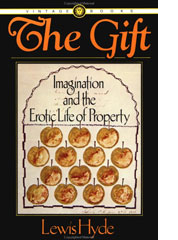
Lewis Hyde, The Gift: Imagination and the Erotic Life of Property (1983) – Updated in 2007 as The Gift: Creativity and the Artist in the Modern World

Lewis Hyde’s The Gift has gone through a couple of subtitle changes but remains a foundational text in understanding the etymology of gifts and generosity. Each chapter addresses a different societal function or environment of gifts and highlights how ubiquitous the phenomenon of gift giving is throughout all communities. Hyde’s work relies on anthropological studies as much as it does on folklore and stories to highlight what a gift relationship entails. Personally it was interesting and revealing to start with but eventually got to a point where the essential arguments were simply being restated with a different example or situation. If the topic is interesting to a reader then this is an essential reading otherwise the early chapters and introduction serve a better educational purpose. It is considered a modern classic after an initial publication in 1983 with the 25th anniversary edition titled The Gift: Creativity and the Artist in the Modern World, this in comparison to the original The Gift: Imagination and the Erotic Life of Property. The British version titled The Gift: How the Creative Spirit Transforms the World, further information on these versions can be found here. Perhaps these titles can indicate a little of the sort of content that The Gift generally contains, specifically the idea of creative spirit and the idea of a divine gift that artists, performers and high achievers are considered to have.

The idea of an individual being gifted was the most compelling area of the book for me. The consideration that a gift is something that needs to be used and remain in consistent motion might not seem immediately relevant to a gifted individual but when considered more deeply Hyde makes it clear how this can be thought about.

First it is important to consider more traditional forms of gift and separating it from commodity exchange that dominates the market. Hyde suggests gifts are not governed by value but worth since many gifts have emotional or spiritual meaning invested in them. Take for example a family heirloom or a gift made for someone else in need. For someone hungry a gift of food will be far more meaningful than if they scraped together money and bought some food. The food may have the same value but far different worth.

There are several distinct senses of “gift” behind these ideas, but common to each of them is the notion that a gift is a thing we do not get by our own efforts. We cannot buy it; we cannot acquire it through an act of will. It is bestowed upon us. Thus we rightly speak of “talent” as a “gift,” for although a talent can be perfected through an effort of the will, no effort in the world can cause its initial appearance. Mozart, composing on the harpsichord at the age of four, had a gift.

p.xi-p.xii

The quotation above touches on the essential learning from The Gift that a gift does not need to just be a physical item and there is often an innate gift/talent.

However, the first chapter considers one of the most common gifts, that of food, with Thanksgiving next week this is relevant. Food is given as a gift and if it is not consumed it is sometimes seen as offensive to the gift giver. In addition, the gift giver is not assured of reciprocity which is a key element of gift giving in general. The gift can be passed on when the receiver later themselves gives food to others or another form of gift. A gift exchange can be between just two people but often becomes more circular.

The gift that is not used will be lost, while the one that is passed along remains abundant.

p.22

A gift can be wasted in many senses and when the base level sees life as a gift then it is clear how this can be extrapolated to many areas. Food given as a gift that is then not consumed is wasted, a family heirloom that is pawned off is no longer a gift, and an innate ability to create beautiful art is a gift wasted if the artist fails to pursue their talent. In so many ways gifts can be wasted, Hyde comprehensively addresses what form a gift can take as well as how gifts are received or given.

In a continuation of the idea of worth against value there is also a consideration of labor and work. The third chapter for me was incredibly interesting because of this consideration. There is a presentation of the idea that industrialization has expanded work at the expense of labor. The turn of phrase, labor of love perhaps explains the key difference between labor and work. Work is the daily job while labor is in pursuit of talent or a gift. It is possible that one can influence the other positively but it is presented in such a way that one comes at the cost of the other.

The other chapters consider when gifts are given, such as transformational times or at points of change in life, or how gifts create closer communities and potentially strengthen relationships. The bond that gifts create is such a foundational aspect of gifts that every chapter covers an element of this relationship. While gifts are given without an assurance of reciprocity there is an understanding that it would be passed on or reciprocated eventually. In small communities gifts can be passed around and effectively bring everyone together through the bonds the exchanges create.

As suggested, The Gift is essential for understanding the etymology of gift giving and generosity and comprehensively addresses various aspects of both the gift and its resulting relationship. Hyde also offers a useful historical and anthropological background on small community studies related to gift circles and it offers a fascinating insight into the positive implications of generosity and gift giving at large. The book is repetitive at times and has certain sections that are of more interest to particular readers but is important for the subject area.

A Thousand Splendid Suns

Khaled Hosseini, A Thousand Splendid Suns, (2007)

A story that follows the lives of Mariam and Laila as they respective narratives gradually intertwine, A Thousand Splendid Suns is at times crushingly sad but in others hopeful and inspiring. The book starts out following Mariam as she deals with an absentee father and a harsh, strict mother. Her experience is defined by her social status and the dishonorable fashion of her birth, that of her mother being a maid in her fathers house while he had a number of wives. Mariam’s mother consistently reminds her she is a harami, a derogatory term that becomes part of how Mariam sees herself. She holds her father in high esteem and while he loves her, he does not want her to blemish his image in Herat. This comes to a head when she wants to go to his cinema as well as spend time at his home. He leaves her outside the front gates in the cold and her opinion of him drastically shifts. The story moves through this setup quickly and expands after Mariam is given to Rasheed for marriage after Mariam’s mother hangs herself and Jalil (Mariam’s father) and his wives push for her to leave the family home in Herat.

The story is defined by the rigid patriarchy of society even in the case of Laila who becomes the second main character of A Thousand Splendid Suns. Laila is many years younger than Mariam and the gradual intertwining of their stories starts when Mariam moves with Rasheed and lives up the street from Laila’s family. Both Laila and Mariam have family lives defined by unfortunate circumstances and events. For Mariam, the loss of her mother and her father giving her up, and for Laila the death of her parents during an attack in which a rocket hit her family home. For Laila the civil unrest also heavily impacted her life when her brothers were killed in combat after they had left the family home. This sends her own mother down a self-destructive path but Laila’s father maintains a positive outlook and is encouraging to Laila’s own ambition and supports her education.

However, the upheaval of the Mujahideen, Taliban and turbulent politics of the region and the period ultimately end Laila’s hopes of pursuing the opportunities that her father would have wanted. While Laila grows up the story follows Mariam’s marriage and a series of miscarriages and a gradual decline in her relationship with Rasheed. The troubling relationship between Mariam and Rasheed only grows when they rescue Laila after the rocket explosion and he takes Laila as a second wife. It is with both Laila and Mariam under the same roof that the story escalates and takes some exciting twists. While Rasheed only wishes for Laila to have a son, her first child is actually fathered by Tariq a boy from the same neighborhood who Laila was incredibly close to. Since Laila gives birth to a daughter Rasheed follows the same distancing behavior that Mariam experienced. This ends up drawing the two women together and Rasheed’s violent and abusive behavior ultimately results in both of them attempting to escape.

The story continues to escalate and the ensuing twists occur in the context of war and conflict. There are triggering sections given the harsh and violent circumstances of Afghanistan during the time of A Thousand Splendid Suns. The two women eventually have very different conclusions to their stories with Laila ending in a much more positive situation. It is the team work and reliance that both show once they become closer that provides a glimpse of hope and inspiration within the otherwise violent and aggressive environment. Mariam leaves an indelible mark on Laila’s life and vice versa.

This is a fantastic book and the way that the two women’s lives gradually intertwine makes a fascinating story. While the historical context and triggering events of both women’s lives is difficult to read at times there are aforementioned glimpses of hope and inspiration. It is the persistence and overcoming of suffering that this book seems to emphasize, early on in the story Mariam’s mother teaches her daughter this lesson of dealing with suffering. Both Laila and Mariam put up with their fair share of suffering but through their experiences the suffering is seen to pervade society. A Thousand Splendid Suns can offer an interesting history lesson behind the fascinating narrative and it is the context that colors the experiences of the characters within the story. Western imperialism drastically shaped periods of the history and context, as did political instability and patriarchy. The detail Hosseini imbues in the story adds to a rich narrative and I will definitely re-read this book at some point as I am certain I missed some aspects that were incredibly interesting.

A Perfect Day for Bananafish

J.D Salinger, A Perfect Day for Bananafish, (1948)

I am currently reading A Thousand Splendid Suns and I did not have enough time to read the whole book. In interest of continuing a book/short story per week, I read A Perfect Day for Bananafish a couple of weeks ago as it is short but renowned as part of J.D Salingers collection of works. This piece is considered to have shifted his position in literary circles for the better. I found this short story to be relatively blunt and depressing in many ways, while Catcher in the Rye is a longer story that has the opportunity for analysis and enjoying some sections, A Perfect Day for Bananafish for me started and ended in sad circumstances.

There is discussion of PTSD but critics and analysis tends to see Seymour’s state as a result of far more than just PTSD and memories of World War Two. What I was not aware of was his presence in other Salinger works. This would add more context to the character who in the end commits suicide. His aloof and self-obsessed wife shapes the early background on Seymour in this story and her own characteristics likely define how his experience is reflected in the text. Seymour is clearly troubled but this could be the result of many things even if it prompts his actions that in many ways are inappropriate and only add to the depressing nature of the story. Muriel Glass, Seymour’s wife begins the story on the phone with her mother and the details of her life are derived from this conversation such that the aloofness and self-obsession is clear to see.

The interaction between young Sybil Carpenter and Seymour define the second section of the story after Muriel’s phone conversation. It is during this conversation that the titular bananafish are referenced. As I read this interaction I felt uneasy and Sybil references another young girl Sharon Lipschutz who was at the hotel and sat with Seymour as he played the piano the previous evening.

“Well they swim into a hole where there’s a lot of bananas. They’re very ordinary-looking fish when they swim in. But once they get in, they behave like pigs. Why, I’ve known some bananafish to swim into a banana hole and eat as many as seventy-eight bananas.” He edged the float and its passenger a foot closer to the horizon. “Naturally, after that they’re so fat they can’t get out of the hole again. Can’t fit through the door.”

There is little space to interpret Seymour’s irritability following Sybil leaving, this is a story that requires context and looking at his actions in a more general sense. There is a juxtaposition of Sybil’s innocence with Seymour’s own anguish, critics align this with another cause for his eventual suicide. Generally, though there is space to draw conclusions of what motivated Seymour to do what he did. The collection of Salinger’s work would inevitably help provide more context, however, it also clear that he leaves actions in this story open for the reader. The phone call section is far easier to derive information from and points to a wider universe of characters in the Glass family. I did not really enjoy this story as it was just a depressing piece without a huge amount of plot or narrative but given the common style of Salinger’s works this is perhaps unsurprising. If you did not enjoy Catcher in the Rye this short story will evoke similar feelings. The vague interactions and Salinger’s writing style are generally critically well received and this does fall into the category of writing that has been received positively, however, clearly I just do not have the same positive feelings toward his writing.

Create your own website, free on WordPress.com.Create your own website.
Start free