
Paula Hawkins, The Girl on the Train, Riverhead Books (2015)
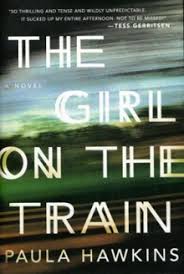
The Girl on the Train gripped readers worldwide when it was published and released in 2015 topping the New York Times bestseller list. This is with good reason as its reputation preceded my reading and it certainly fulfilled its reputation. The concoction of its major tropes and themes create a thrilling and compelling story that brings the reader along with the major characters and their perspectives on events. A mystery thriller with a murder case that occurs after a perhaps disorienting start, The Girl on the Train continues to build to a prolonged conclusion that gets the heart racing.
A key aspect of the story is the position of an unreliable narrator. Even though there are multiple perspectives there are different reasons in each case for the narrator in question to be considered unreliable. Hawkins weaves together three different perspectives as three women become increasingly intertwined in the events that unfold. The interaction between the three women creates a situation where the book has no real protagonist, although Rachel is the character the reader meets first and drives the plot. The plot moves chronologically almost in a journal format where events of the day and thoughts about the situation are described. However, when two of the three interact the events descriptions are seen from both sides. The wider net of individuals in this story are also often linked to more than just one of the women and play a significant role in how events unfold. The web of connections, relationships and interactions add complexity to memories of the events and this allows space for the reader to speculate and play their own detective role. While the murder case is the focus of the story, many side plots and twists give the reader opportunity to try and think about what the real truth may be.
It is clear to see as the story unfolds that it is building to a large climax where the reader and the narrators reach a significant point of clarity. The events crescendo to an action packed conclusion that draws together all the perspectives and possible loose ends. However, as suggested earlier it is the unreliable narrator that adds the additional layers to the story to make it so compelling. With the conclusion the reader finds out whether their own judgments were accurate.
The reader will likely empathize with the three protagonists at different times and through all the unfortunate events that befall them. The twists that are hugely impactful on one of the three protagonists do not necessarily even effect one of the others. This fact largely results in a consistently eventful book even if it is clearly building to a larger climax. What this also means is that the pace of individual perspectives do not necessarily align, this separation of perspectives actually engaged me more in the story as I tried to piece the events together like a puzzle. Thinking about this book further I found a similarity to the recent movie Knives Out. It is also a murder mystery with a number of characters having distinct perspectives and motives that built to an eventful conclusion. Both Knives Out and The Girl on the Train made me empathize with certain characters and want to work out how one was guilty or which recollection of events was more accurate.
There are also a number of gripping sections where my heart felt like it skipped a beat and to me this is a sign of a great book. Short punchy sentences following extended sections of dialogue or duller paragraphs that lull you into a sense of security suddenly shattered. I do not think anyone can truly see the ending coming in this book early on, although there are signs and signals and by the end there is some relief as it became increasingly clear who was responsible. There are themes that are relatable even though they may be depressing in nature. There are also lessons about the red flags of abuse in relationships and manipulation.

The Girl on the Train is rightly recognized as a brilliant book. The style and plot complement each other to create an engaging story that keeps the reader attentive to the plight of the three women. Furthermore it is paced individually per perspective which adds to the complimentary style and plot. Events in each of the three perspectives could be separate stories even though they end intimately intertwined. The conclusion is a satisfying ending to the twists and turns of the story. It is a story that has elements that may be relatable as well as moments of darkness. Ultimately it masterfully covers essential characteristics of a murder mystery thriller and The Girl on the Train has now become one of my favorite books. The reader only ever knows as much as the narrator and in each case it seems aspects are missing from the narrators stories. This situation makes the book as a whole more compelling. It is no surprise after its success that it saw a movie adaptation fronted by Emily Blunt.
 The Weekly Book Report