
Naomi Alderman, The Power (2017)
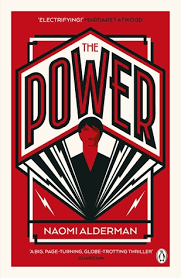
The day of the girls has arrived – but where will it end.
Naomi Alderman, The Power
The Power is a fascinating book as the language of the patriarchy is reversed following the awakening of an electrical power in most women across the globe. It is important to note that it is most women rather than all women as this factor shapes the society that emerges. As the most compelling dystopian novels tend to do, Alderman creates a society that hinges on a distorted version of the same contemporary societal trends. With the awakening of an electrical power in an organ called the skein the world sees a rapid change in power structures. There are a variety of nuances to these societal changes and the reader observes them through the perspectives of a handful of figures including a male journalist, Tunde. Framing the developments through a multitude of perspectives allows a more complete picture of how different people adapt to the new structures of power in the world. The results are a flipping of traditional hierarchies and the ongoing battle for power from those that wish to preserve the old ways and those welcoming in the new.
It is more interesting though when reading to consider how traditional language has been reversed in the story. Stereotypes and gendered language become reversed as power shifts to women with the the most powerful skeins. The shift to a matriarchy from the patriarchy may initially seem a significant one but it swiftly becomes clear that the former is merely a reflection of the old traditions. All the traditional language becomes female dominated but this does little to actually change the structure of the hierarchies. Fundamentally the book shows the corruption of power and while it is fascinating to read this from a flipped perspective the events that unfold are not dissimilar to those experienced in the male dominated world. What The Power shows aside from the compelling dystopian story is an intricate critique and commentary on the nature of power itself. The story represents an overthrow of centuries if not thousands of years of patriarchal attitudes and language. However, what emerges is a similar structure expressed through a matriarchy.

The collection of protagonists that all become intertwined in each others stories are compelling and all are essential in shaping the new society. There are dark moments in the story which are necessary to show the individual characters motivations. There are also surprising twists and revelations that occur through the gradual corrupting nature of power. Some of the snippets from reviews that come on the back of the book summarize these essential aspects of The Power.
‘Irresistible. Holds a mirror up to the here and now.’ (Mail on Sunday)
‘A fascinating look at what the world might be like if millennia of sexism went the other way. Ingenious…deserves to be read by every woman (and, for that matter, every man.)’ (The Times)
Personally it highlighted some evident flaws in the attitudes of a patriarchy and represented a commentary on the absurdity of some of those attitudes. Furthermore, it highlights levels of corruption that come with power. The shifts of language that emerge with events in the book as the first review suggests, holds a mirror to the here and now. The exposure of stereotypes and how easily these shift is also a fascinating element of the story that flips traditional gender roles. Interestingly, as noted not all women have the power and some men do have a sliver of it. This is a key element to parts of the story that act as close commentary on such gender roles. Expectations of boys and girls born into the new society are addressed, as are the new marketing angles that emerge with a shift from patriarchy to matriarchy.
In some ways this is a feminist book, in other ways it is a dystopian fiction and in a lot of ways it is a commentary on contemporary society. All of this together combines into one of the most compelling fiction books I have read. It prompts questions as well as reflections on the state of gendered language, stereotypes and power corruption. While elements may be uncomfortable it is not a conventional dystopian novel as it plays on many of the forces and trends that are present in contemporary society. It reflects the possible outcomes of a shift in power structures as well as the problems of such structures. Even with the major shifts that occur in the story the hierarchies still create many of the same problems that already existed under the patriarchy. This is a book that has so many layers to it that it could be read multiple times through many lenses and still nuances would be missed.
 The Weekly Book Report